
For anyone who considers themselves a disciple of H.P. Lovecraft, the landscape of modern media is a minefield of potential disappointment. We are a demographic that is constantly being courted by developers, directors, and authors, yet we are rarely satisfied. The unnamable horror that Lovecraft so masterfully penned in the early 20th century is notoriously difficult to translate into a visual medium. Too often, projects cannot seem to capture the existential dread and the crushing weight of cosmic insignificance. As an avid fan who jumps at every new Cthulhu-themed series, movie, and game, I have learned to temper my expectations. However, every once in a while, someone manages to grasp the true essence of the mythos while bringing something fresh to the table. Big Bad Wolf’s Cthulhu: The Cosmic Abyss is that rare gem, a game that honors the legacy while daring to evolve it.
A Futuristic Descent into Ancient Madness
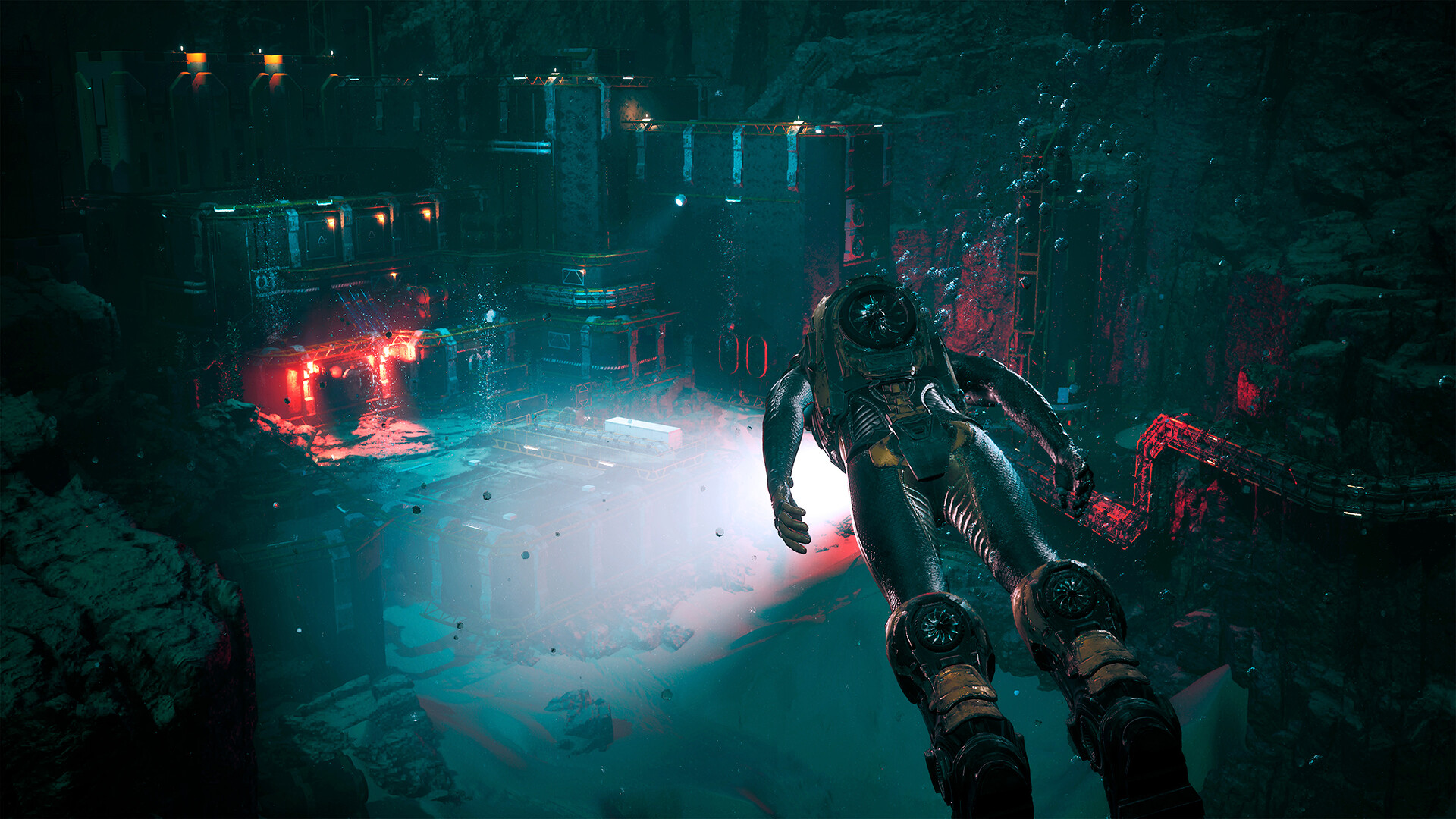
Traditionally, Lovecraftian games are rooted in the past, usually the 1920s or the Victorian era, where gaslight and telegrams set the mood. Cthulhu: The Cosmic Abyss takes a bold leap forward into the year 2053. The world of the mid-21st century is a bleak one; resource scarcity has pushed humanity to its limits. In a desperate bid for survival, nations and corporations have turned their gaze away from the stars and toward the crushing pressures of the deep ocean, seeking new materials and answers to the energy crisis.
You step into the boots of Noah, an investigator for a secret division of Interpol that focuses exclusively on occult affairs. This “Occult Interpol” concept is brilliant, providing a grounded, professional reason for Noah to be poking around places where common sense should forbid entry. The game begins with a chilling opening chapter that shortly leads Noah to a research facility situated at the bottom of the Pacific Ocean. His mission is straightforward: find out what happened to a group of missing miners. Of course, in a cosmic horror setting, missing is often the best-case scenario.
Noah isn’t alone in this journey. He is accompanied by an AI named Key. In a genre where solitude is often used to build tension, the inclusion of Key feels good and natural. She provides a sounding board for Noah’s observations and plays an essential role in the investigation. Her presence allows for a dynamic exchange of ideas that keeps the plot moving, though it also raises the stakes, how does an artificial intelligence process the irrational, non-Euclidean reality of the Old Gods?
As Noah moves deeper into the abyss, the familiar tropes of corporate negligence give way to the terrifying reality of the Great Old Ones. The game uses a mix of high-quality cutscenes, branching dialogues, and buried environmental storytelling. I found myself obsessively searching for every document, recording, and scrap of lore I could find. The writing is compelling and even the smallest memo feels like a crucial piece of a massive, terrifying puzzle.
Deduction, Logic, and the All-Seeing Sonar
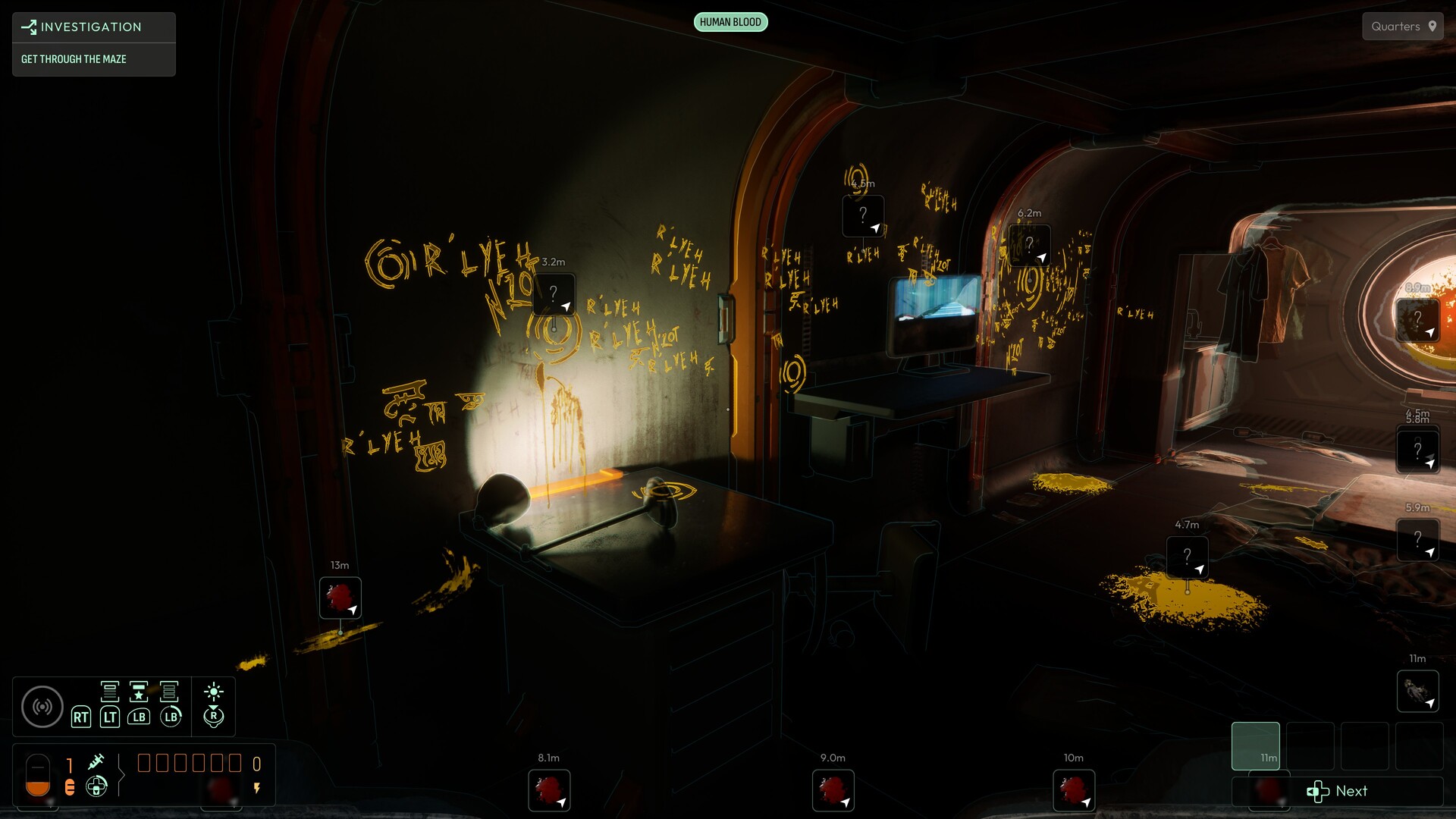
At its heart, Cthulhu: The Cosmic Abyss is an investigative puzzle game, and it is arguably one of the most refined examples of the genre in years. It focuses on a core gameplay loop of gathering information and performing deductions. To move forward, you must act like a true detective. You aren’t just looking for keys to doors; you are looking for truths that unlock progress.
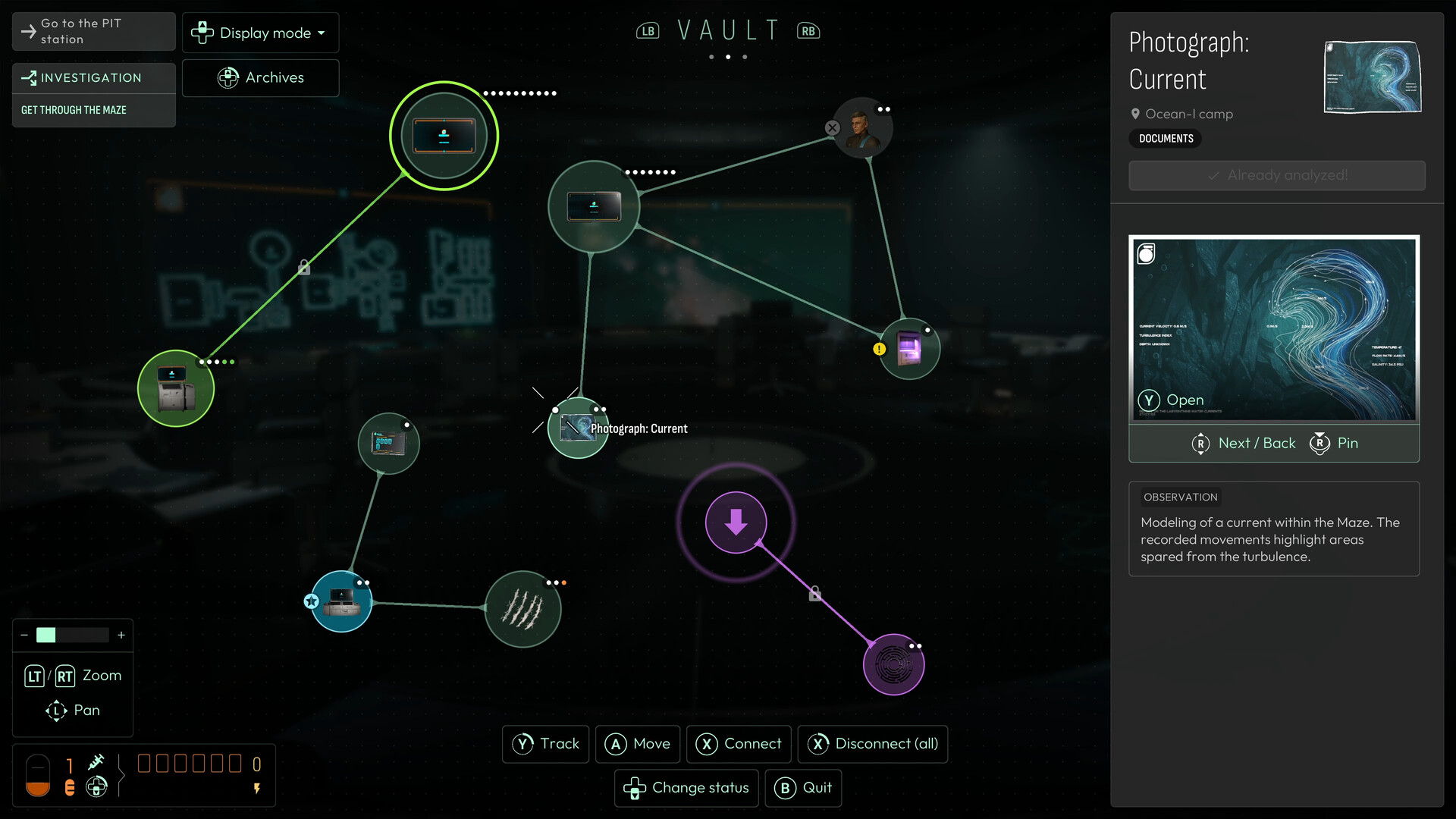
The game is dense with interactable elements. You are constantly analyzing documents, ancient stone slabs, computers, and recordings. Every piece of information is a thread in the larger tapestry. Once you collect enough data, you must draw conclusions about the environment. This might involve decrypting an ancient cipher found on an altar or figuring out how to safely swim across a small lake.
The standout mechanic, however, is the sonar. In the murky depths of the Pacific, your eyes are often your least reliable tool. The sonar allows Noah to scan for specific material signatures. You can align the frequencies to find heavy metals, organic tissue, or ancient stone. The depth of this mechanic revealed itself when I realized I could combine materials to find hidden paths or specialized items. The game uses the UI where the sonar shows undiscovered items as question marks; this constant visual hint kept me engaged, pushing me to experiment with different combinations until a new room or clue was revealed.
Structure-wise, the game is divided into distinct chapters. Each chapter acts as an isolated sandbox, a self-contained area with its own set of clues, puzzles, and sonar frequencies. This was a wise design choice by Big Bad Wolf. It prevents the player from feeling overwhelmed by the sheer volume of information. When you enter a new area, you know that the tools to solve the current problem are within reach. It creates a satisfying rhythm of confusion followed by a Eureka! moment. Every time I felt stuck, a quick experiment with the sonar or a re-reading of a discovered log led me to the solution. The feeling of intellectual accomplishment when you solve a complex deduction is far more rewarding than any combat encounter could be.
The Atmospheric Contrast of Metal and Mythos
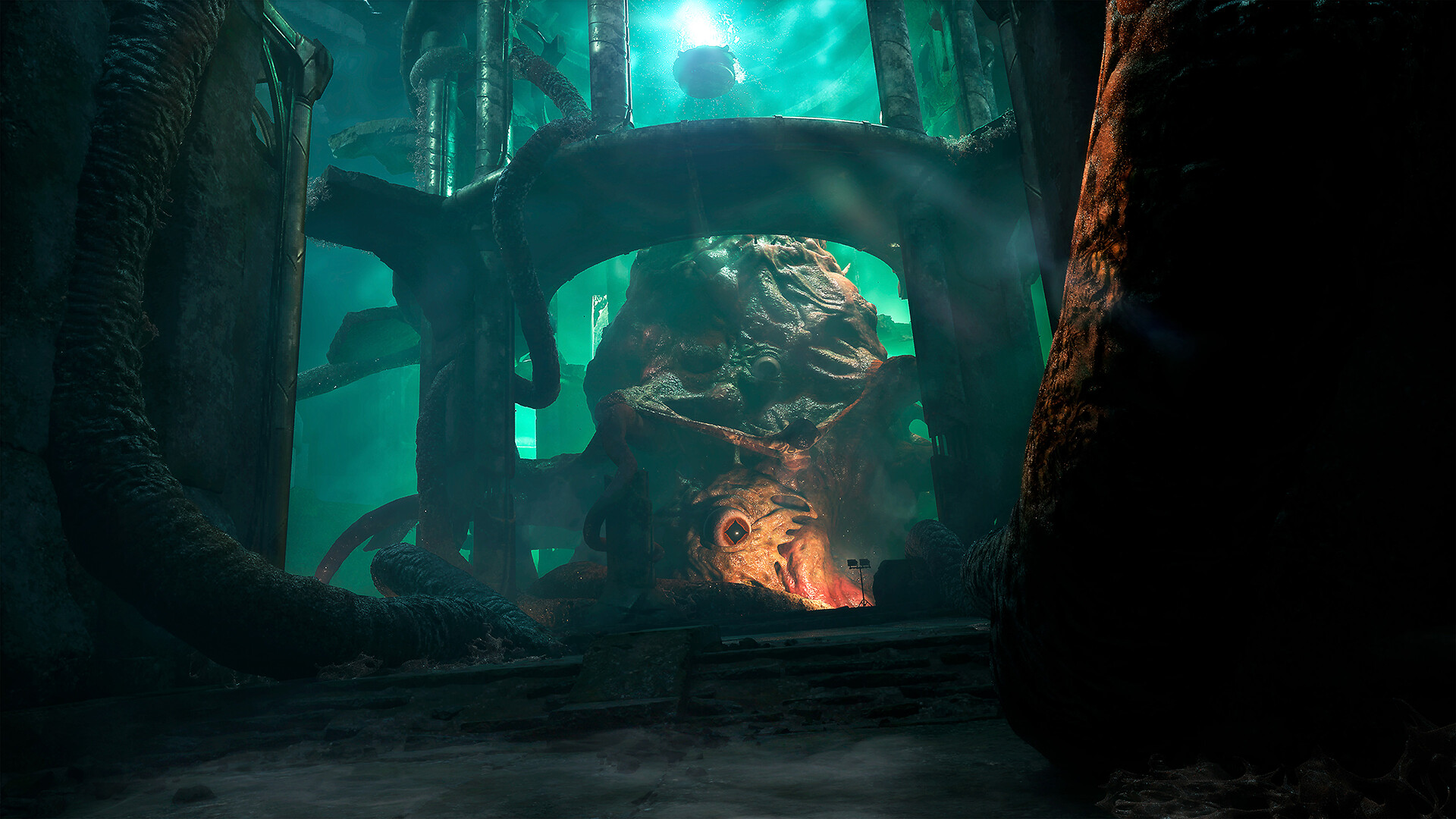
Visually and aurally, the Cosmic Abyss has a great atmospheric design. It manages to perfectly marry the futuristic aesthetic of science fiction with the terrifying architecture of the Lovecraftian world.
In the early parts of the game, the environments reminded me strongly of SOMA. The research facility is a claustrophobic maze of leaking pipes, flickering screens, and industrial steel. But as Noah descends further, the human architecture begins to mingle with—and eventually be swallowed by—lost civilizations. Seeing these massive, alien structures rise out of the seabed was a visual treat that looked exactly as I had envisioned while reading Lovecraft’s At the Mountains of Madness.
The dread is palpable. The game creates a constant sensation of being watched by something immense and uncaring. This feeling is bolstered significantly by the sound design. The groaning of the facility’s hull under the ocean pressure, the distorted pings of the sonar, and a soundtrack that shifts from ambient sci-fi hums to discordant, haunting melodies all contribute to a sense of impending doom. The sanity mechanic isn’t just a bar on the screen; it’s reflected in the way the world looks and sounds as Noah’s mental state begins to fracture under the weight of what he is discovering.
A New Standard for Cosmic Horror
Cthulhu: The Cosmic Abyss is a triumphant addition to the Cthulhu mythos. By moving the setting to the near future, Big Bad Wolf has found a way to rejuvenate the genre, providing fresh tools and perspectives without losing the core themes of insignificance and madness that make Lovecraft’s work so enduring.
The combination of the investigative gameplay and the innovative sonar mechanics makes for a cerebral experience that respects the player’s intelligence. It isn’t a game about shooting monsters; it is a game about the terrifying cost of knowledge. Noah and Key are fantastic leads who anchor the cosmic stakes in human (and artificial) emotion.
If you are a fan of mystery games, sci-fi horror, or if you simply have a shelf full of leather-bound Lovecraft stories, this is a must-play. It is a haunting, beautiful, and deeply intelligent journey into the dark. Cthulhu: The Cosmic Abyss doesn’t just live up to the legacy—it carves out its own place within it. It is, without a doubt, one of my favorite games in the mythos, and a stark reminder that some secrets are better left at the bottom of the ocean.
Leave a Reply