
Over the past few years, Insomniac Games has established an undeniable rhythm of hit after hit, carving out a golden standard for modern superhero adaptations. On paper, handing the reins of Wolverine to this powerhouse studio seemed like a recipe for absolute magic, a promise of the cinematic, ultra-violent, character-driven journey fans have been begging for. But stepping into Logan’s adamantium boots reveals a perplexing identity crisis. Ultimately, Wolverine feels like a project that never quite figured out what it wanted to be, nor how to translate the iconic berserker rage into something that remains engaging from the title screen to the credits.
Predictable Claws and Bland Baddies
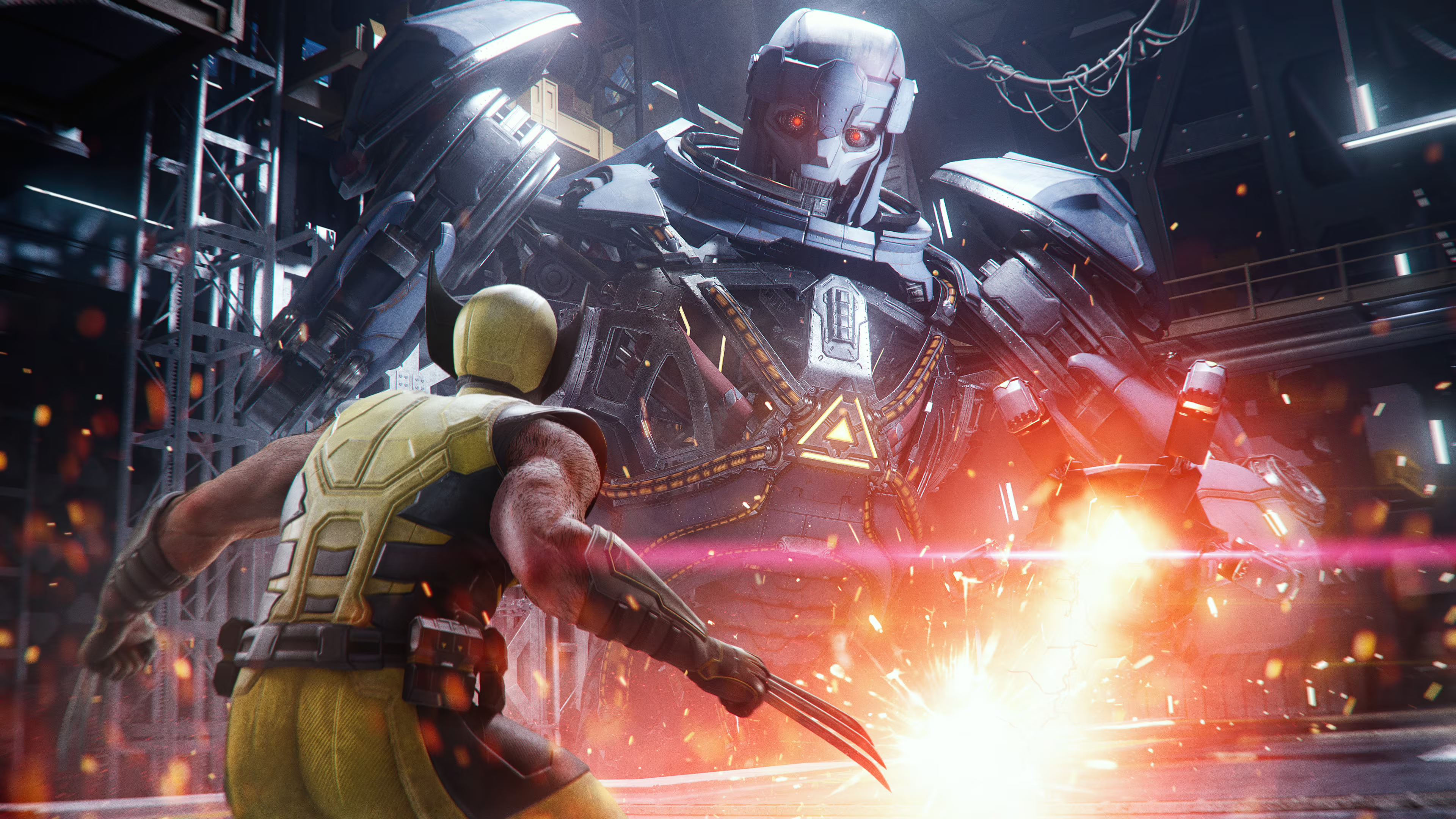
Our journey kicks off with Logan knee-deep in Team-X operations orchestrated by Nathaniel Essex, immediately thrusting players into a high-stakes crusade to thwart Bolivar Trask’s mutant-eradication crusade. From there, the globetrotting narrative whisks us away to the alleys of Madripoor and Japan. Along the way, we cross paths with a rotating gallery of villains. The trouble is, while the game tries desperately to frame these encounters as shocking twists, the writing telegraphs its punches from a mile away. You can practically map out the ending by the end of the first chapter, leaving you craving a narrative with actual teeth and a few more compelling, colorful antagonists to chew on the scenery.
Yet, it’s not all doom and gloom. While the overarching plot struggles to soar, there are genuine pockets of brilliance within the character arcs, Logan’s chief among them. Though his core philosophy doesn’t undergo a massive seismic shift, the internal and relational beats written for him are surprisingly poignant. Characters like Raven start with an electric promise, only to have their development cut frustratingly short. It’s a recurring theme throughout the campaign: compelling threads are spun, but the studio seemingly ran out of time or budget to weave them into a satisfying tapestry.
A Combat Rut and Pacing Whiplash
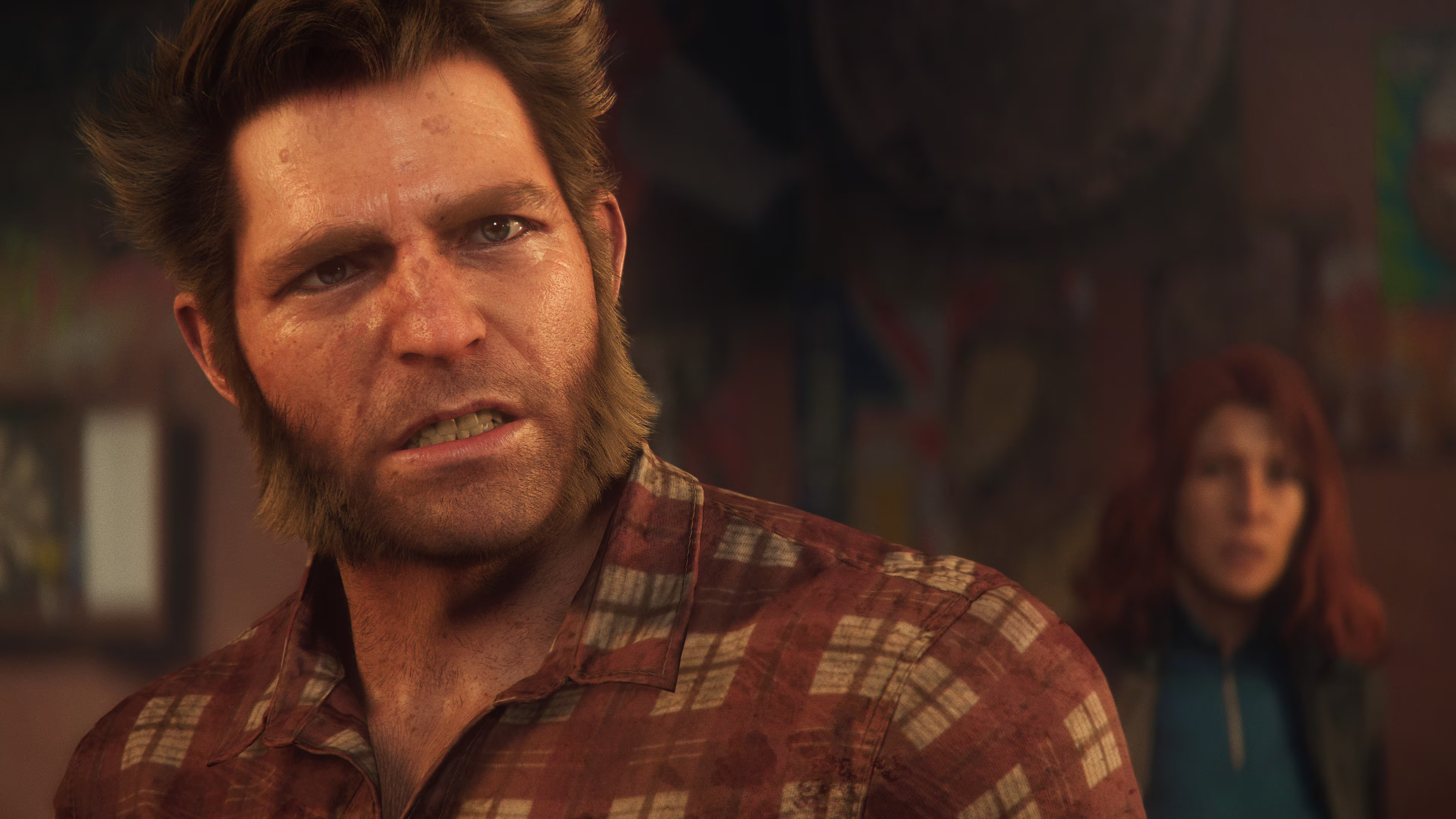
Let’s give credit where credit is due: Insomniac nailed the visceral, bloody fantasy of being Wolverine. Watching Logan leap with feral fury from target to target, slicing through armor with rhythmic brutality and occasionally ripping off an enemy’s arm, looks and feels effortlessly authentic. The problem? Doing that exact same routine for a 17-hour runtime loses its luster remarkably fast. The combat mechanics fail to meaningfully evolve. Sure, you unlock a handful of new skills that make Logan marginally deadlier on paper, but the core feedback loop remains entirely static from the very first brawl to the final boss. By the final act, the encounters stop feeling like power trips and start feeling like chores you just want to get over with.
Exploration suffers from similar missteps. In a mostly linear game, the inclusion of a glaring blue “breadcrumb” fog leading you directly to objectives feels borderline insulting, as if the developers assumed players couldn’t navigate a hallway without a glowing GPS. Paired with an upgrade system that feels aggressively restricted, offering only one or two binary choices before you’ve naturally unlocked the entire tree, player agency takes a noticeable backseat.
Then come the Nightmares. These challenge rooms pop up to test your combat survival skills, time-trial traversal, or body counts, dishing out medals and loot based on performance. On paper, it’s standard action-game filler. In execution, they are fun but aggressively jarring. You could be in the middle of a high-octane cinematic chase, or walking through a weighty, atmospheric dialogue sequence, when BAM, a nightmare door halts the momentum entirely. It’s an immersion-shattering design choice that completely derails the game’s pacing.
A Feast for the Eyes and Ears
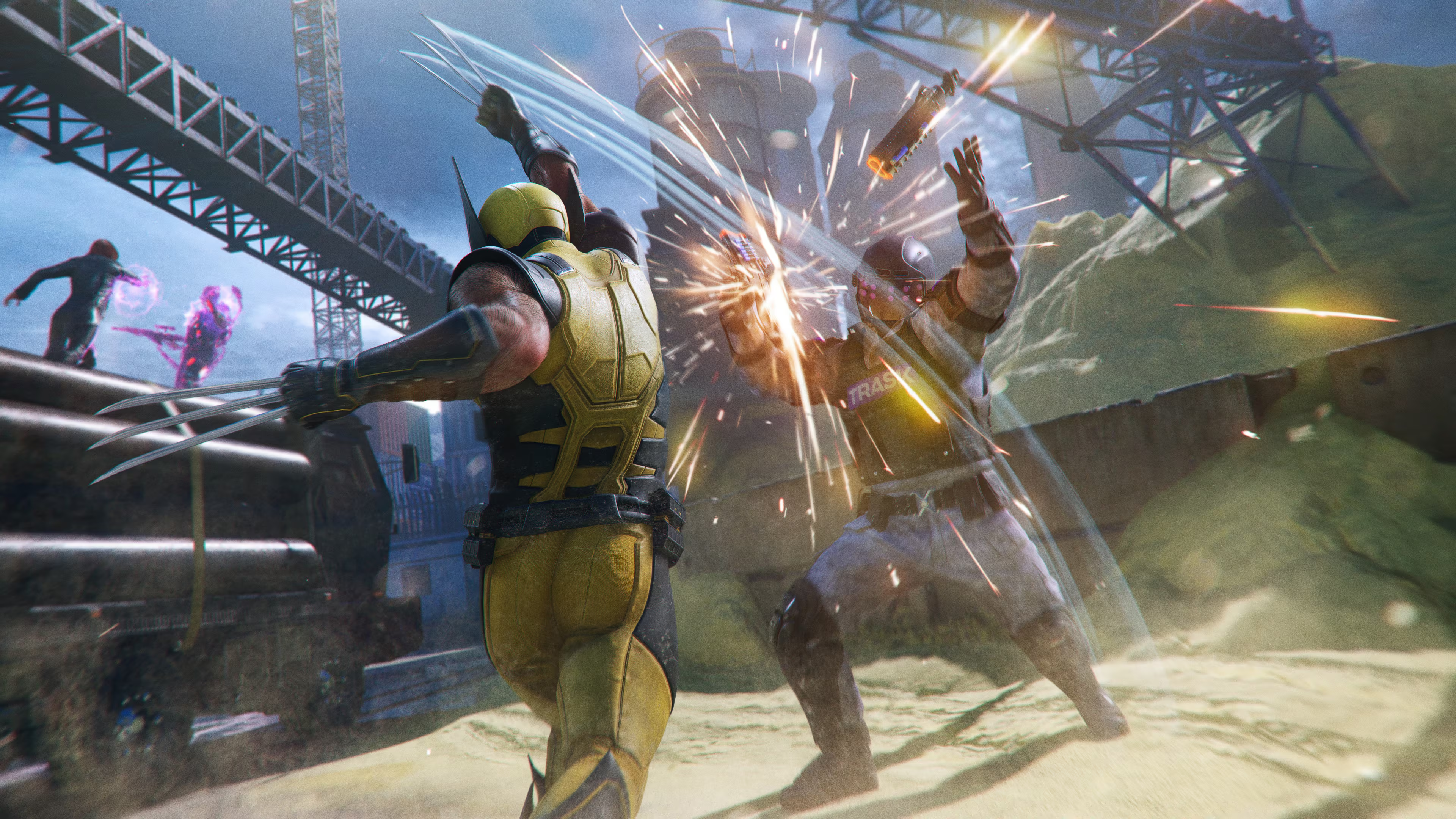
Without a doubt, audiovisual presentation is where Wolverine unleashes its true potential. This is the arena where Sony’s blockbuster production budget shines brightest. From the microscopic details in Logan’s battered shirt to the gorgeous environmental fidelity, the game is a legitimate spectacle. While certain locales, like yet another set of sterile caves and generic laboratories, feel tired by modern gaming standards, the bustling city streets of Japan are great in terms of both art direction and level design. It’s so striking that it makes you wish Insomniac had ditched the linear shackles and gone full open-world just to let us roam those gorgeous blocks.
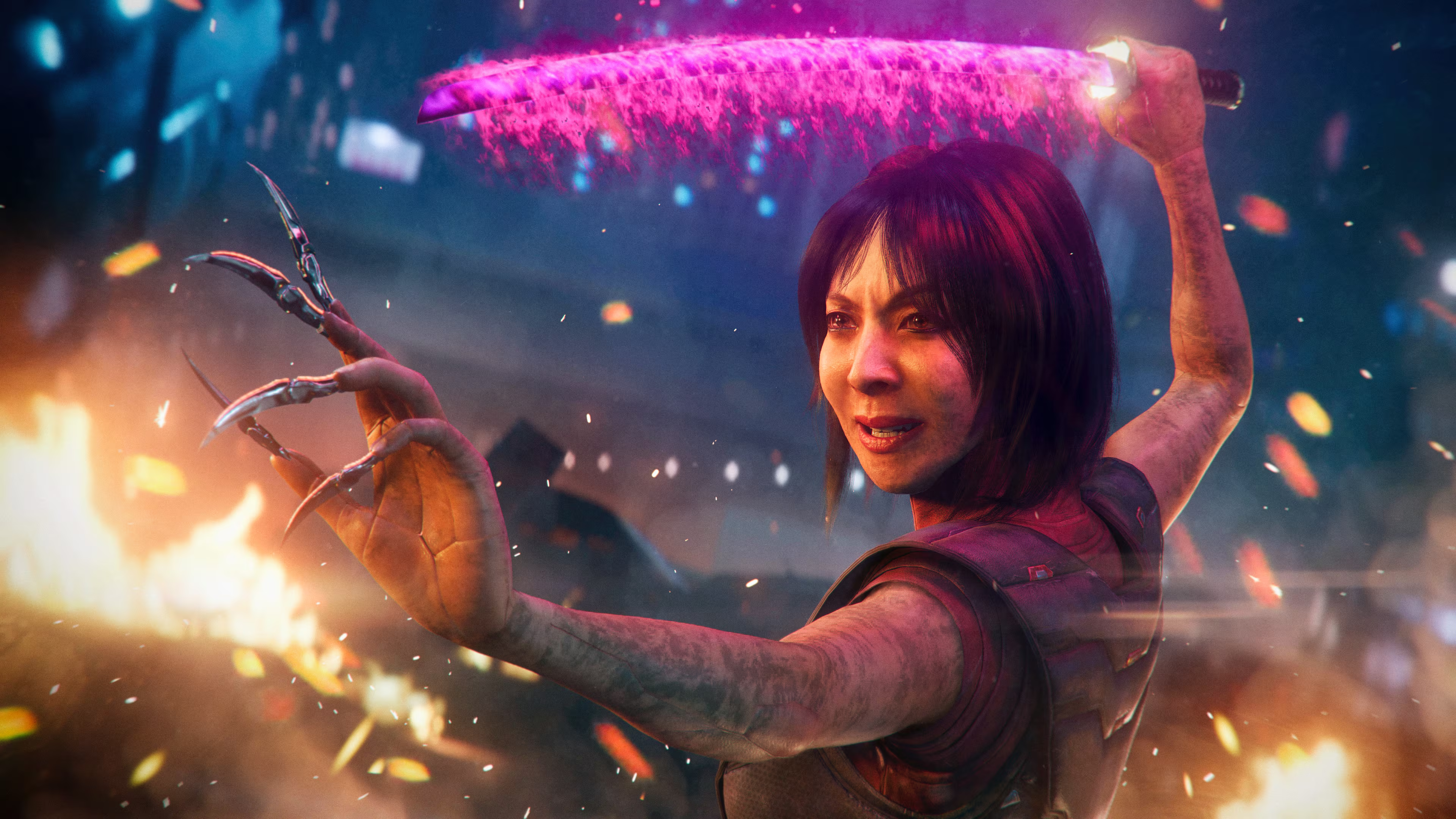
Complementing the visuals is a stellar musical score and powerhouse voice performances. The cast breathes incredible life into characters we thought we knew, anchoring a narrative that might stumble in its plotting, but succeeds in its interpersonal execution. Even when the gameplay mechanics began to grate, the sheer quality of the acting kept me invested in how these arcs would ultimately resolve.
Conclusion
Wolverine is a game of stark contrasts. It boasts breathtaking vistas, top-tier vocal talent, and combat animations that capture the ferocious soul of Marvel’s favorite mutant. It also houses a profoundly predictable story, an aggressively static gameplay loop, forced upgrade systems, and immersion-breaking design hiccups that stall momentum at every turn. If you live for first-party cinematic blockbusters and bleed yellow-and-blue for Logan, there is enough here to warrant a weekend playthrough. But for everyone else? You might want to look elsewhere even if the game isn’t bad, it is kind of mediocre.
Leave a Reply