
The survival-crafting genre has become somewhat oversaturated over the last decade, often relying on the same tired tropes: wake up on a beach, punch a tree, and stay hydrated until you inevitably lose interest. For the past two years, Bellwright has been carving out its own niche on PC, offering a departure from the “lonely survivor” archetype by tasking players with leading a full-blown rebellion. Now that it has finally made its way to consoles, we’ve had the chance to step into the shoes of a revolutionary leader. Despite a painfully slow and familiar opening act, Bellwright ultimately delivers a unique experience that blends survival, management, and tactical warfare into a package that is, ultimately, a blast to play.
Beyond the Beach
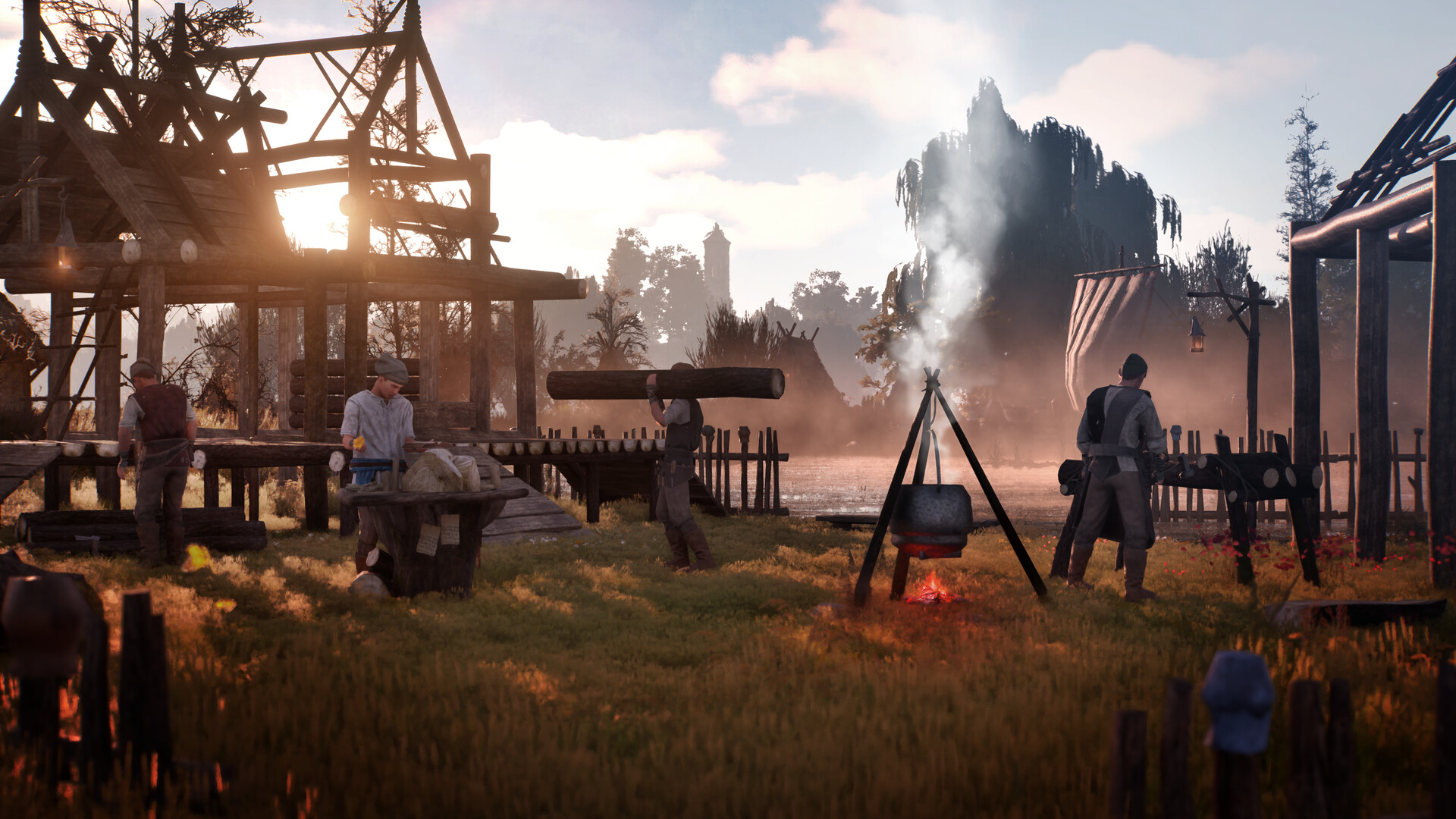
Most games of this treat the story as an afterthought; in Bellwright, it acts as the primary engine for your actions. The premise is genuinely engaging: you are framed for the murder of the Prince, a crime you didn’t commit, and cast into a world of political intrigue and peasant unrest. After discovering a mysterious contract and a collection of items that suggest a deeper conspiracy, your journey shifts from simple survival to a quest for truth and the liberation of an oppressed nation.
I found myself genuinely invested in the overarching mystery, but the smaller, side-narratives are where the world feels most lived-in. When you assist the inhabitants of various villages, you get glimpses into their daily struggles. Granted, the writing is occasionally stale or simplistic, and it won’t be winning any narrative awards for its prose, but it provides context that is often missing from this genre. It is refreshing to have a purpose beyond just “don’t die,” and these everyday tales make the act of reclaiming the land feel personal rather than just mechanical.
From Chores to Command
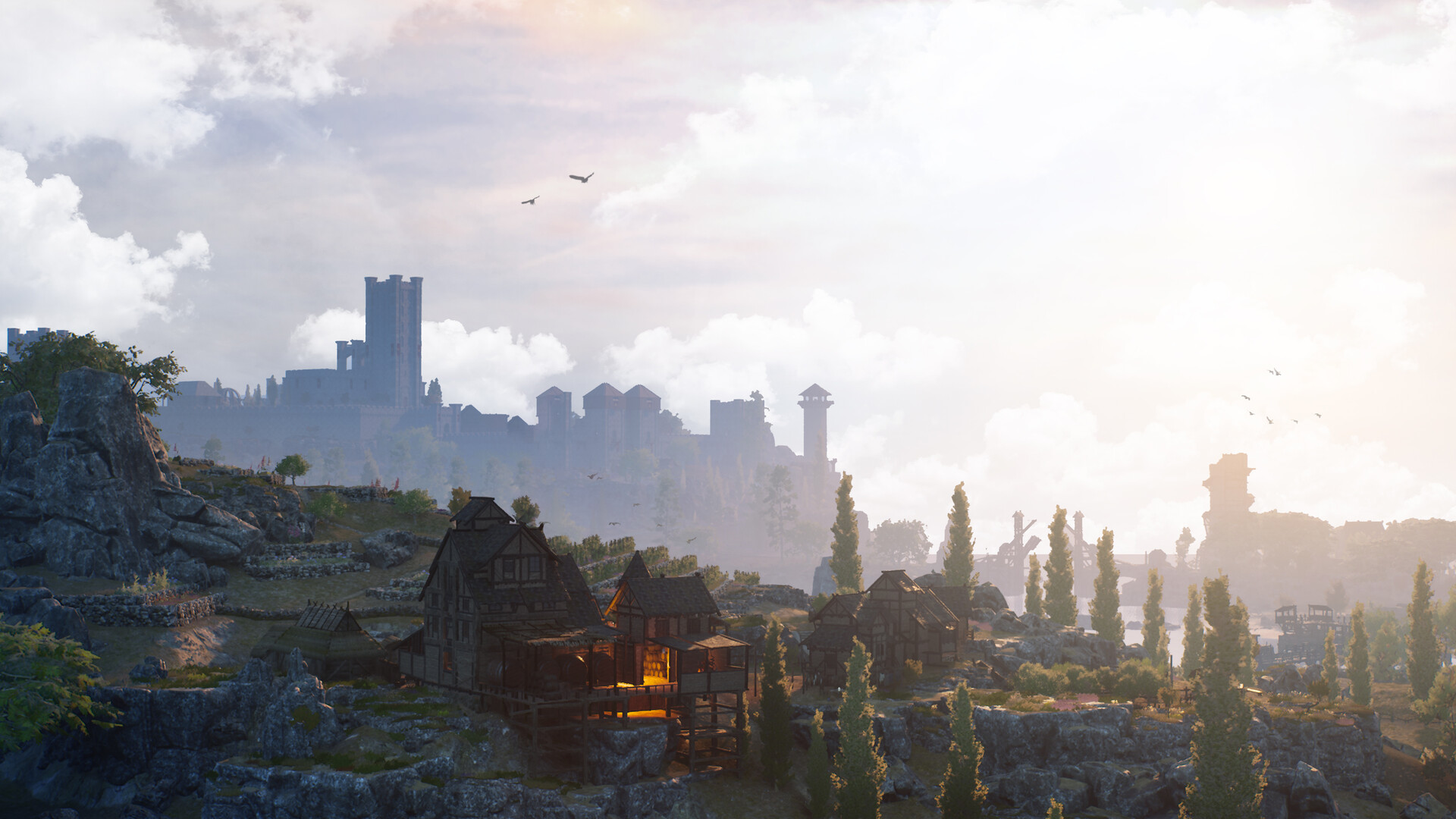
The early game in Bellwright is, to be blunt, a standard affair. You are tasked with the familiar rhythm of chopping wood, gathering resources, and erecting the basic structures necessary for shelter. However, the game wisely avoids forcing you into a prolonged solo experience. You gain access to helpers remarkably quickly, allowing you to establish a fledgling camp and begin delegating tasks. While the building designs are somewhat pre-made and require fewer resources than many of its competitors, making the visual growth of your camp feel faster, the initial grind is still a slow burn. It takes a significant amount of time before the game transcends the “survival chores” phase and blossoms into its true form.
The world of Bellwright is inherently hostile. You are constantly encroaching on the territory of your oppressors, and you must dismantle their camps to free the populace. Your own settlement isn’t safe either; you’ll receive warnings of incoming raids, forcing you to prepare your defenses. Because the game leans so heavily into combat and land acquisition, I had high hopes for the fighting mechanics. Unfortunately, this is where the game falters. The combat feels remarkably stiff and clunky, making skirmishes a frustrating endeavor. I quickly learned to avoid one-on-one encounters, instead focusing my efforts on assembling and commanding a squad of troops to do the heavy lifting for me.
This leads to the game’s true hook: the transition from a survival game to a strategy city-builder. As your rebellion grows, you stop worrying about gathering sticks and start worrying about logistics, population management, and specialization. Assigning citizens to specific roles—farming, smithing, or soldiering—is deeply satisfying. Once you hit this rhythm, Bellwright stops being a run-of-the-mill survival game and becomes an engaging management sim. That transformation is where the game shines, making the slow, tedious climb through the early game worth the effort.
Presentation and Technical Performance
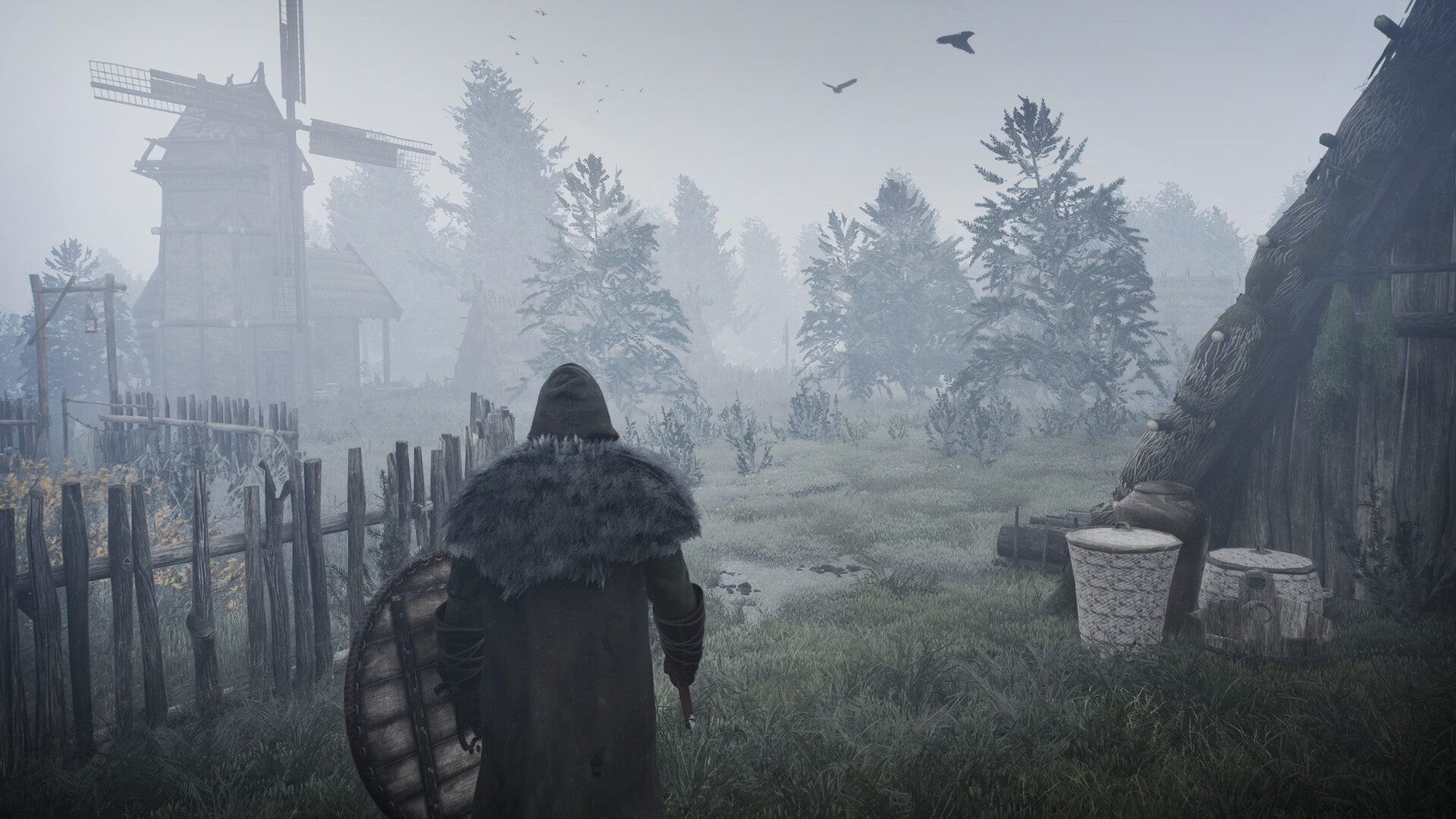
On the PlayStation 5, Bellwright is a mixed bag visually. The character creator is surprisingly robust, allowing for a high degree of customization that makes your protagonist feel like your own. However, once you enter the game world, those details seem to vanish, and the character models suffer from a lack of clarity.
The world itself, however, is often beautiful. The lighting engine is a standout feature; there is something genuinely magical about watching the light filter through the dense treetops as you forage for materials in the early morning. It’s these moments of atmospheric beauty that keep you grounded in the world. Unfortunately, immersion is frequently interrupted by technical hiccups, most notably significant texture pop-in and inconsistent framerates when roaming the map. While these issues don’t render the game unplayable, they are constant reminders that the transition from PC to console isn’t entirely seamless.
The audio presentation is another area of mixed results. I was pleased to see that the developers included voice acting, a luxury not often found in this genre, but the performances range from mediocre to subpar. That said, even the limited, stiffly delivered lines add a layer of presence to the villagers that text boxes simply cannot provide.
A Rebellion Worth Leading
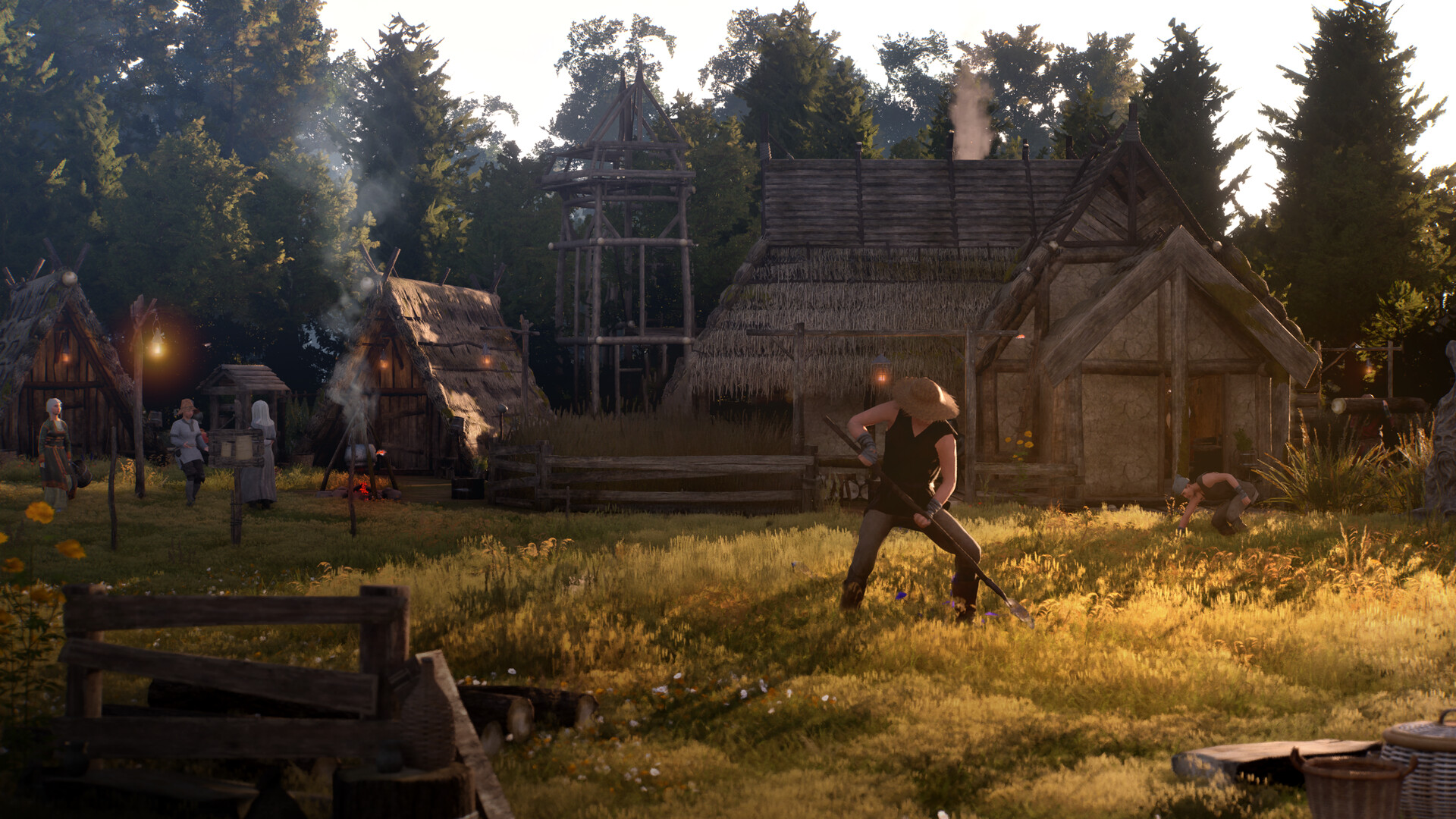
Bellwright is a game of distinct tiers. In the beginning, it is an unremarkable survival experience that asks you to endure a slow, repetitive grind. But if you have the patience to see it through, the game evolves into a deep, rewarding strategy title that makes you feel like a genuine commander.
While the combat is clunky and the technical performance on PS5 suffers from pop-ins and framerate dips, the core gameplay loop, building an army, managing a growing city, and slowly chipping away at an oppressive regime,is incredibly addictive. Bellwright does not reinvent the survival genre, but it does innovate within it by focusing on the macro-management of a rebellion. If you are a fan of survival games looking for something with a bit more structural depth and a sense of progression, the slow start is a small price to pay for the strategic triumph that lies ahead. It’s a flawed journey, but one that is well worth taking.
Leave a Reply