
Over the years, Blizzard has continually demonstrated a commendable willingness to listen to its player base, using community feedback to shape and refine its titles. While my initial time with Diablo IV at launch left me with mixed feelings, harboring a handful of grievances about the game’s direction, three years and two expansions later, it has evolved into the experience I have always wanted from a Diablo game. The game has finally made its way to the Nintendo Switch 2, including both expansions, where the last one is great. Being able to easily dive into Sanctuary in handheld mode might just prove to be my real-life doom.
Technical Performance and Visual Fidelity on Switch 2
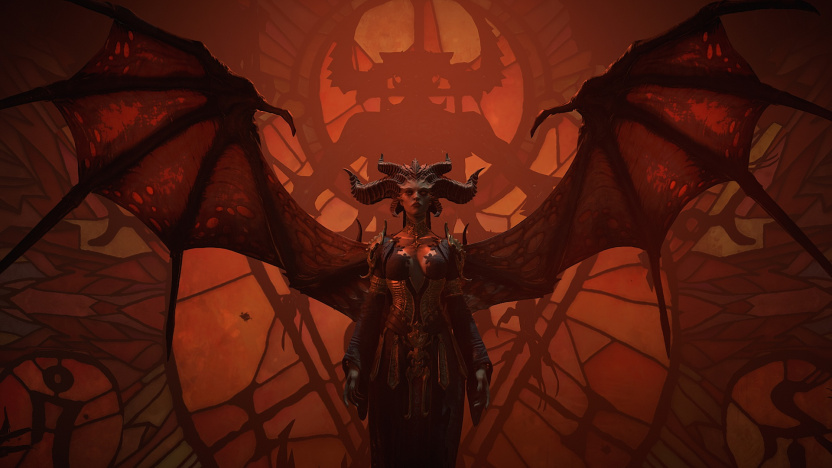
When it comes to hardware optimization, Blizzard has provided players with two distinct graphical settings to tailor their experience. The first is a Performance Mode, which targets a very stable 40 frames per second at 1080p. To achieve this smooth framerate, however, several auxiliary graphical options have been visibly scaled down, making the compromises quite noticeable to the observant eye.
On the other end of the spectrum is the Quality Mode. This setting locks the game at a stable 30 frames per second, running at 1080p in handheld mode and scaling up to 1440p when docked. This mode includes visual enhancements, including ray tracing across the vast majority of areas. The lighting improvements make everything from the ambient shadows to the murky waters look stunning on the Switch 2, translating the gloomy atmosphere of Sanctuary onto the Switch 2 hardware remarkably well. Personally, I found the Quality Mode to be the ideal fit while playing handheld; the sharper picture quality coupled with the rock-solid framerate creates an immersive, premium portable experience.
Complementing these visuals are impressively fast load times for the Switch 2. Whether you are teleporting across the map or entering a sprawling dungeon, transitions are snappy and seamless, ensuring that the gameplay flow is never awkwardly interrupted. Furthermore, these load times remain consistently swift regardless of which graphical mode you have chosen.
That being said, the release is not without its minor missteps. One glaring omission in the Switch 2 version is a lack of support for the Joy-Con 2’s new mouse mode. Given the precision traditionally required by RPGs and the unique capabilities of the new hardware, utilizing mouse functionality feels like it would have been a natural inclusion to properly showcase how well the feature works in practice.
Seamless Integration and Multiplayer Features
While cross-progression is no longer an entirely novel concept in modern gaming, the sheer effortless execution of it in the Diablo ecosystem deserves high praise, and serves as a gold standard that more developers should adopt on day one. Linking your Nintendo Switch account to your Battle.net account takes moments, and once completed, you instantly have access to all your existing characters from PC or other consoles. Seamless cross-platform ecosystems should be the industry norm for all multiplayer titles moving forward.
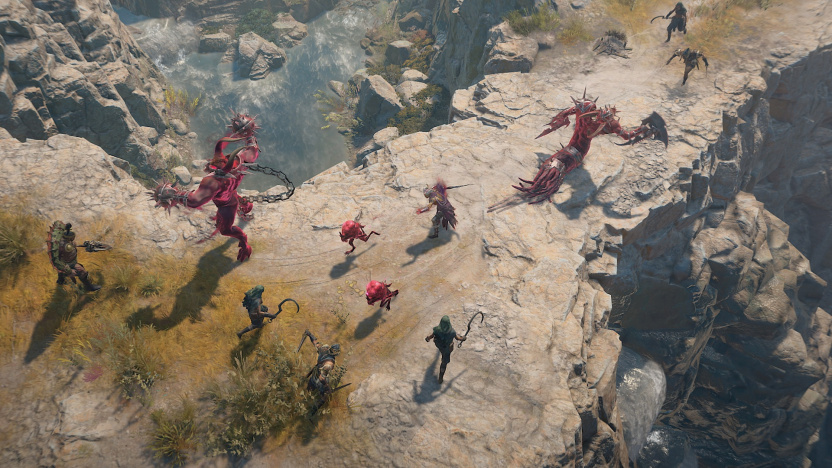
Mirroring the console iterations of Diablo III and IV, this new port also brings back couch co-op, a feature that provided countless hours of entertainment for me in the past. On the Switch 2, this is taken a step further: while it might not be the most ergonomic setup, the ability to play using a single Joy-Con each means you can impromptu co-op with a friend just about anywhere, whether you’re commuting together on a train or hanging out at a bar. Admittedly, the screen can feel a bit small and chaotic when the action ramps up, but clearing a dungeon side-by-side with a friend away from the television was an absolute blast. It serves as yet another reminder of how uniquely well-suited the Switch 2 is for this style of game.
It is worth noting the online requirements as well. While you do not need a Nintendo Switch Online subscription to boot up and play the game solo (though an active internet connection is still required), teaming up with other players does necessitate an active membership.
Conclusion
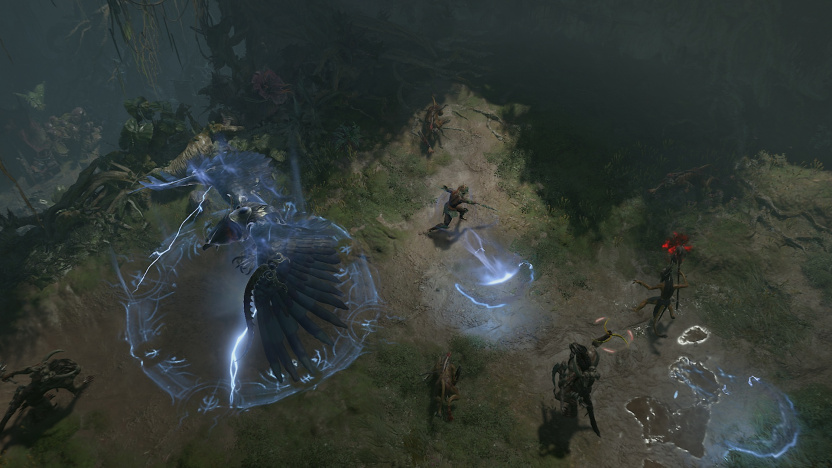
With the arrival of Diablo IV on the Nintendo Switch 2, Blizzard has successfully managed to get me completely hooked on the eternal conflict all over again. The port is technically impressive, particularly in handheld mode, where the visuals look great and the flawless cross-account integration means the Switch 2 version can easily function either as a companion device for your existing progression or as your primary platform for slaying demons.
If you have somehow managed to avoid the title until now, this portable-friendly iteration provides the definitive way to experience it. And if you are a franchise veteran who, like me, finds yourself continually returning to Sanctuary, having Diablo IV on the Switch 2 is the ultimate way to keep your leveling going wherever you go.
Leave a Reply