
Finding a new project from Sohei Niikawa, the legendary creator of the Disgaea series, is always a cause for celebration among RPG fans. However, Etrange Overlord managed to fly surprisingly low under the radar before its release. Combining the pedigree of Niikawa with the premise of a musical RPG centered on a young girl conquering the depths of hell, the game presents a unique, if eccentric, package. After spending significant time with the title, it is clear that while Etrange Overlord is a charming experience, it is very much a niche game tailored for a specific type of player.

The Rise of Étrange von Rosenburg
The narrative kicks off with lightning speed. The protagonist, Étrange von Rosenburg, is falsely accused of regicide and executed within the first two minutes of the game. It is a bold, efficient start that immediately transports her to hell. If the demons she encounters expected a weeping spirit, they were sorely mistaken. Étrange is no pushover; in fact, she is quite the opposite. She decides on a whim to not only survive the underworld but to take it over entirely, and perhaps conquer a few other places while she’s at it.
The story never attempts to dive into deep philosophical territory or epic melodrama. Instead, it maintains a light, whimsical, and fun tone throughout. One of the more endearing (and recurring) plot points is Étrange’s massive sweet tooth, which often drives the direction of her journey as much as her quest for power. Along the way, she encounters a cast of fifteen playable characters, each more over-the-top than the last. While the writing isn’t exactly high literature and the character arcs are relatively thin, the sheer weirdness of the cast provides the game’s narrative highlights. It is a story told with a wink and a smile, prioritizing personality over complexity.
Accessible Action in the Underworld
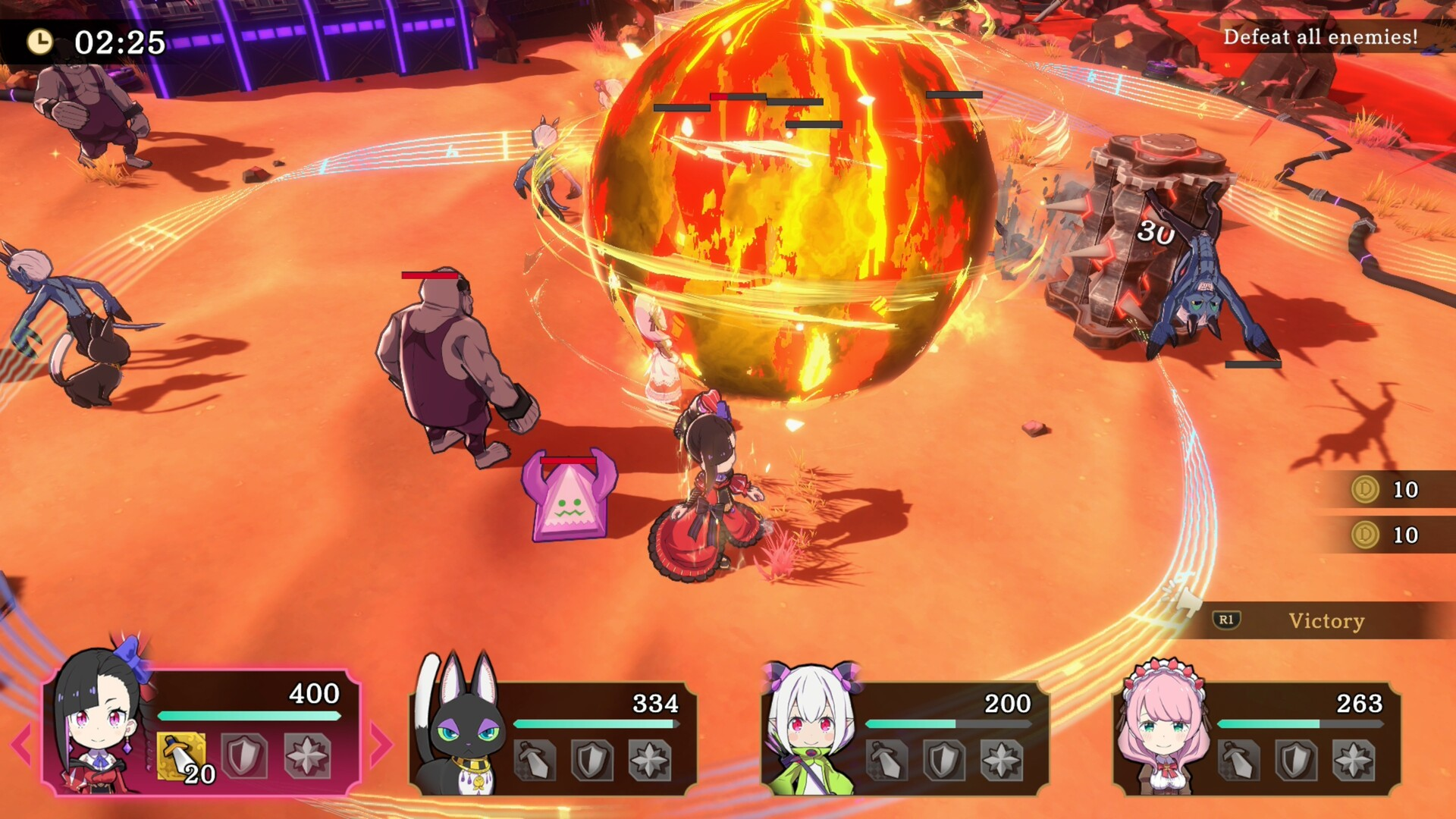
When it comes to gameplay, Etrange Overlord identifies as a very light action RPG. It feels explicitly designed for players who want a low-stress experience, one where you don’t need to worry about complex build optimization or high-speed reflexes. The game is structured around an overhead world map divided into various regions. Each region contains a series of missions, and clearing these is the key to unlocking the next area.
Interestingly, the open map serves mostly as a bridge between missions, as the actual combat is confined to small, isolated arena-style stages. These battles usually last only a few minutes, making it an ideal game for “pick-up-and-play” sessions. If you are playing on a handheld device, the game feels perfectly at home, allowing you to knock out a few missions during a commute or a short break.
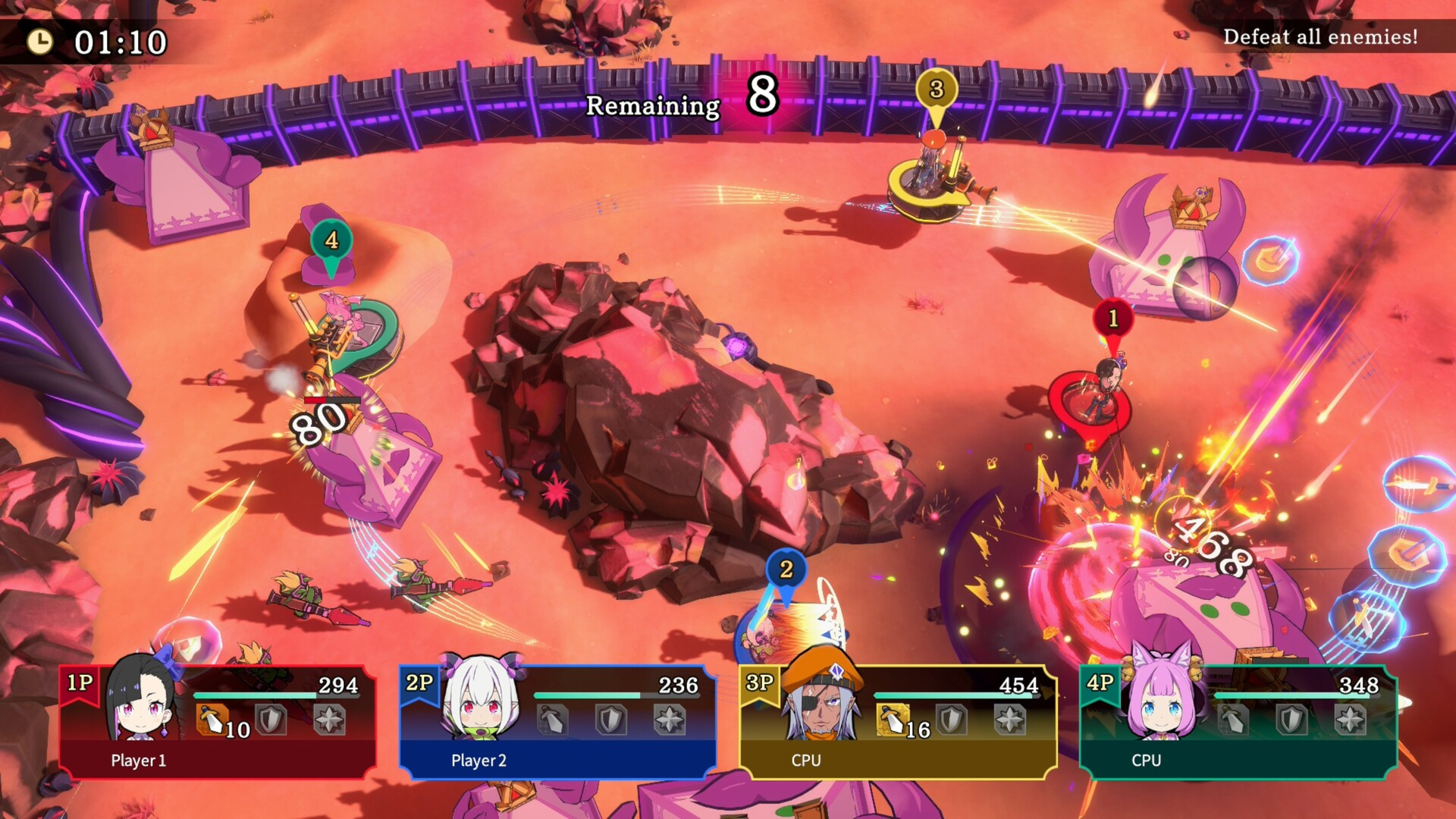
The combat itself is extremely simplified. Players face waves of enemies and must defeat a specific quota to progress. While the game introduces bonus objectives, such as completing a mission without taking damage, the core remains the same. You have a primary attack button that deals significant damage, and the environment is littered with floating objects. These objects can be grabbed to provide healing, defensive buffs, or special offensive attacks. While this is a clever mechanic in theory, the game’s difficulty is so low that I rarely felt the need to use them. My standard attacks were usually enough to clear the room, and I rarely took enough damage to warrant searching for a healing item. It’s a relaxing system, though perhaps too simple for those seeking a challenge.
Chibi Aesthetics and Melodic Interludes
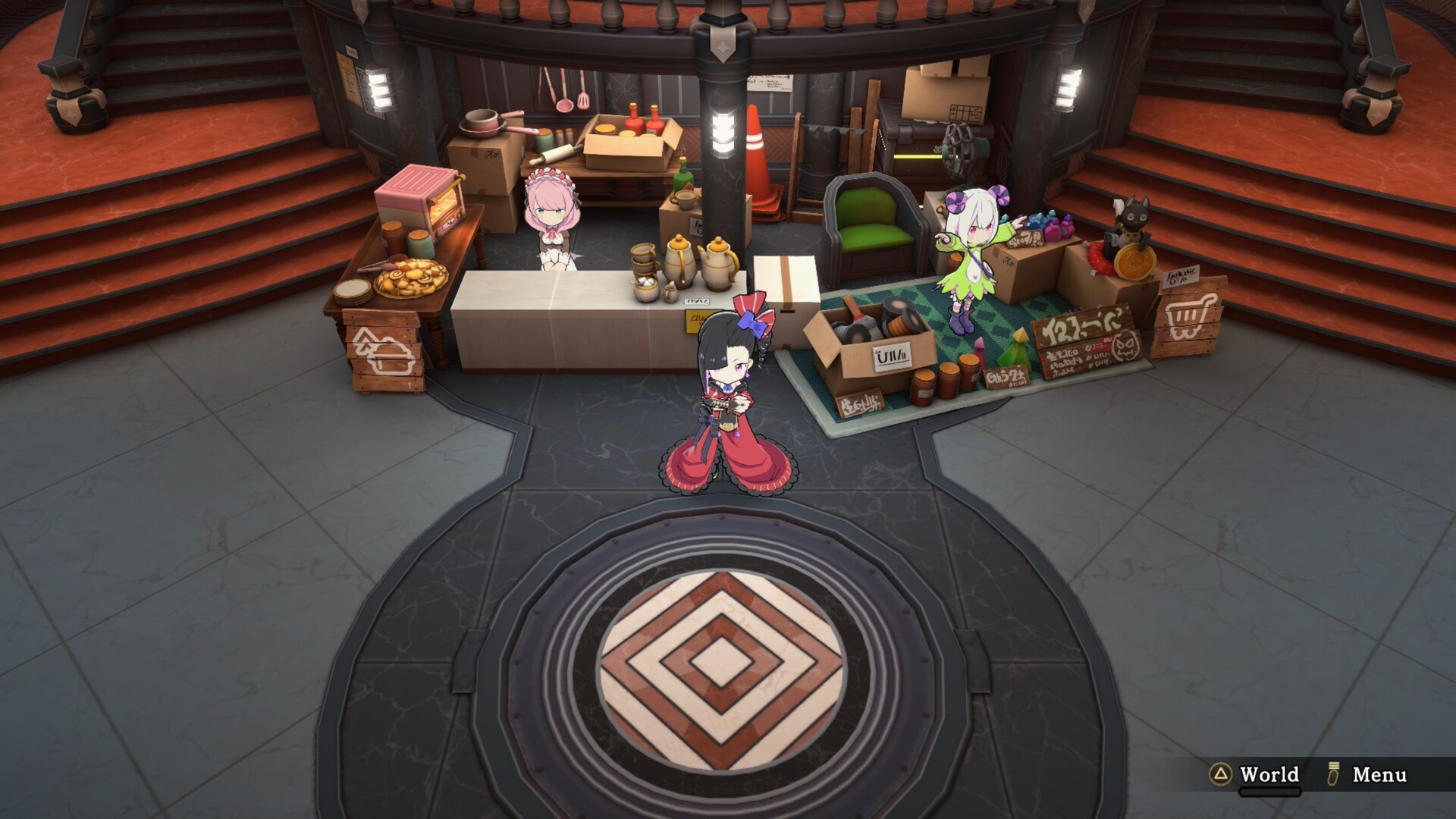
Visually, Etrange Overlord adopts a chibi art style that complements its lighthearted tone. It’s undeniably cute, fitting the simplified nature of the gameplay perfectly. However, the presentation does feel a bit dated. The environments can feel empty and repetitive, and while the main cast is visually distinct, the enemy designs lack variety. You will find yourself fighting many of the same models throughout your journey.
The game’s most unique feature is its use of musical cutscenes to convey major story beats. These segments are a breath of fresh air; the singing and music are genuinely high-quality and fit the “Hell-musical” vibe well. However, they are often frustratingly short. You might spend ten minutes clicking through standard text dialogue only to have a musical number end in less than a minute. I often found myself wishing the game leaned even harder into its musical identity, as these segments are easily the most memorable parts of the presentation.
Conclusion
Etrange Overlord is a cute, simple, and breezy game that doesn’t demand much from the player. It is a title built for comfort, offering a lighthearted story, an easy-to-grasp combat system, and a charming aesthetic. If you are a fan of musical theater, cute art styles, and games that can be enjoyed in short bursts without much mental tax, this is likely right up your alley. However, for those seeking the deep strategy of Disgaea or a high-octane action experience, Etrange Overlord may feel a bit too basic. It is a pleasant journey through hell, even if it doesn’t quite reach the heights of the classics that inspired it.
Leave a Reply