
The Disciples franchise has been a niche staple of the strategy‑RPG hybrid scene since its debut in 1999 with Disciples: Sacred Lands. Over the years the series has oscillated between ambitious attempts and occasional misfires, but each entry has retained a core identity: dark fantasy, heavy‑metal aesthetics, and a blend of turn‑based tactics with role‑playing progression. After the polarizing launch of Disciples: Liberation (2023), the developers at Artefacts Studio set out to address the most vocal complaints—clunky interfaces, opaque storytelling, and a steep learning curve. The result is Disciples: Domination, marketed as a direct follow‑up to Liberation and, in many ways, the most accessible entry the series has offered.
Having played every previous Disciples title, I approached Domination with cautious optimism. The premise of stepping into the shoes of a queen in a world teetering on the brink of chaos was enticing, and the promise of smoother, more intuitive mechanics was hard to ignore. After 40‑plus hours of exploration, battle, and council‑room decision‑making, I can say that Domination lives up to its ambitions—though not without a few rough edges.
From Liberation to Domination
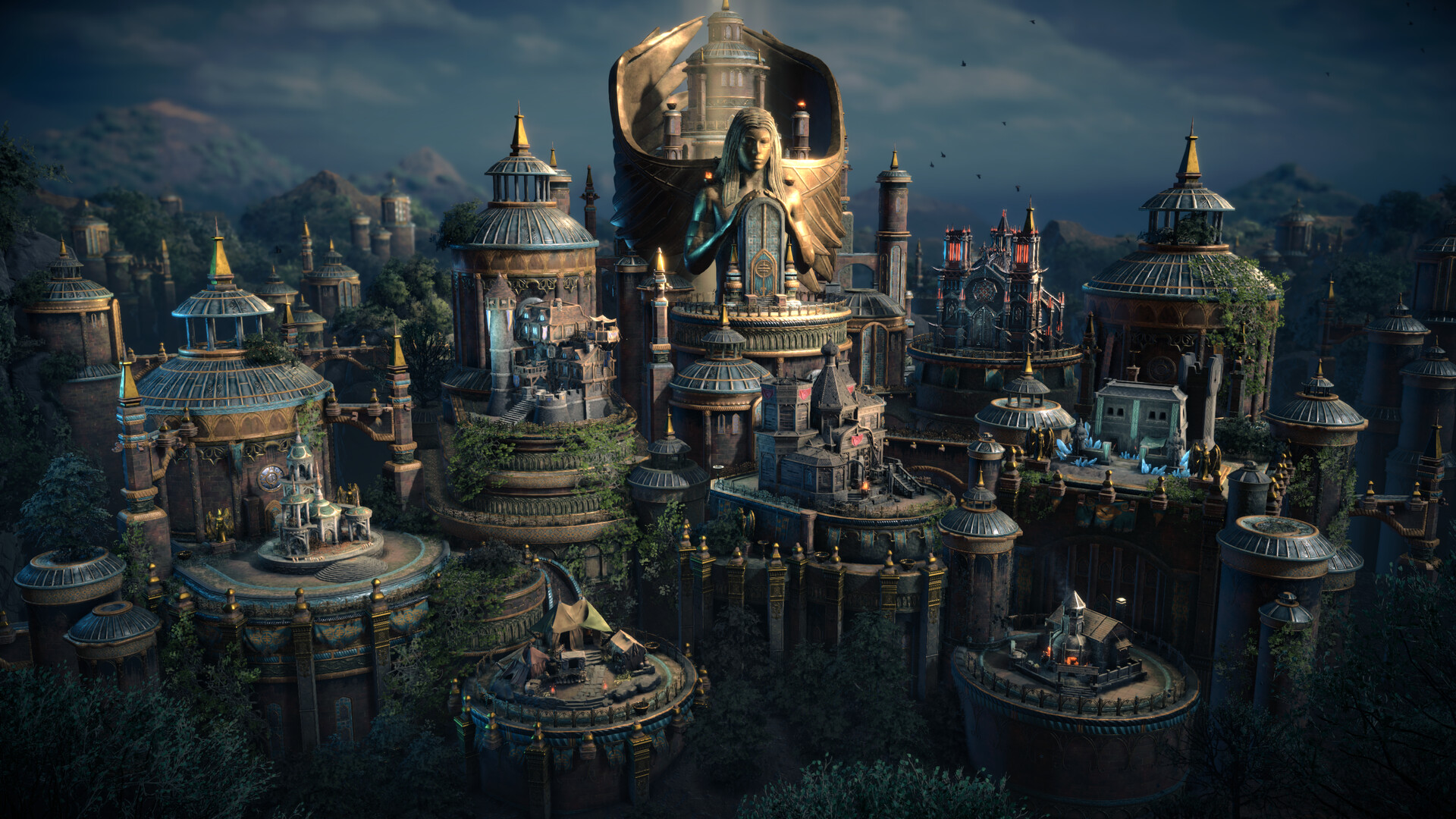
Domination picks up immediately after the ending in Liberation with Avyanna taking the throne. Fifteen years have passed and she has shut herself away from the world outside while the kingdom crumbles. Once again she must move across the realm to unite the people, confront a new evil, the queen.
And so, as the queen, you must navigate a world where old grudges are reignited, new powers emerge from the shadows, and the very land you rule shifts beneath your feet. The narrative never feels over‑laden; instead, it offers bite‑sized vignettes that gradually expand the picture, allowing you to focus on the immediate crisis—restoring order before the darkness consumes everything.
The Sweet Spot Between RPG, Strategy, and Ruling Simulator
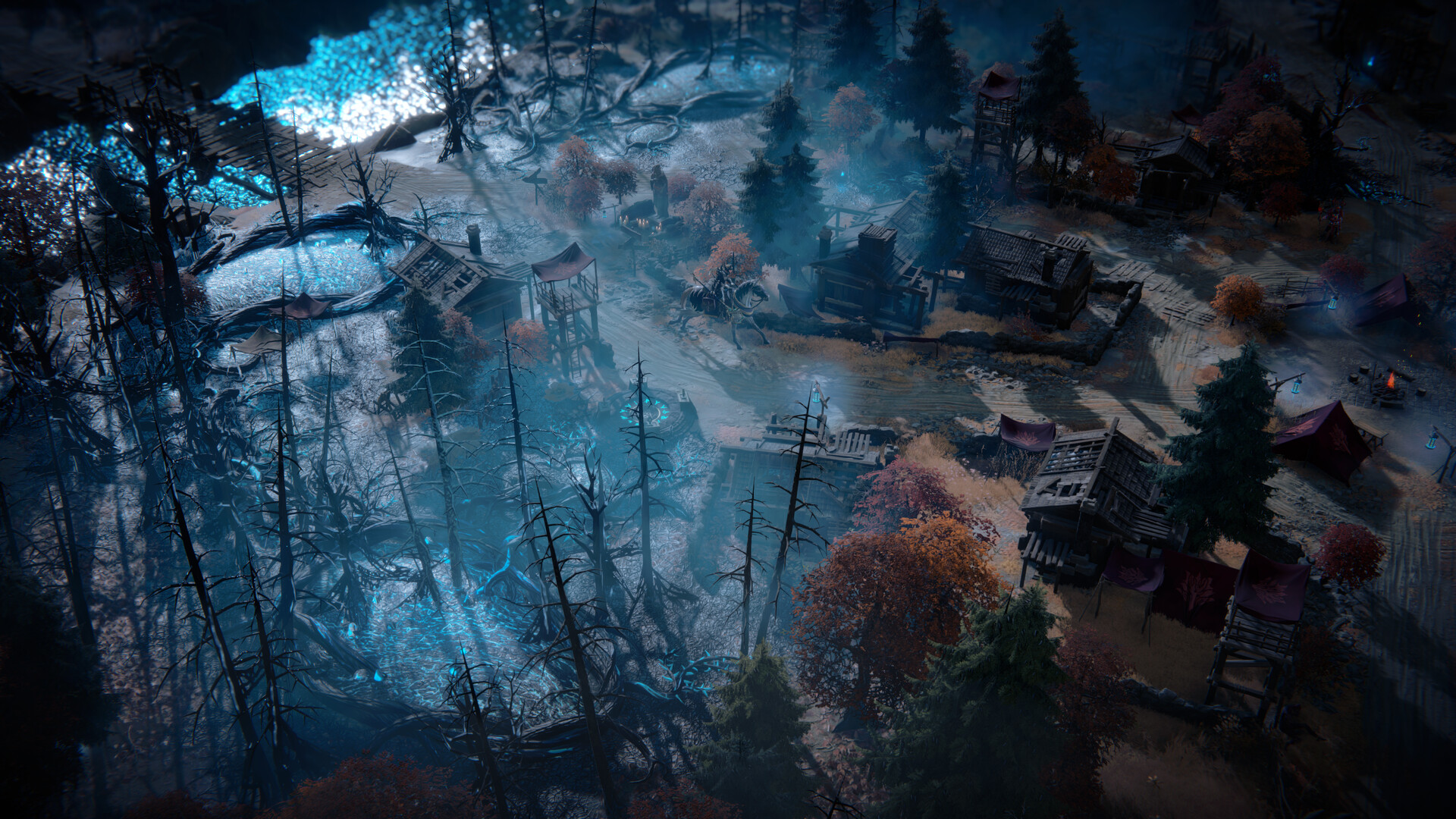
The first thing you notice when you step out of the palace is the open-area map, a sprawling map filled with isometric art. Domination lets you roam freely, taking on side‑quests, hunting treasures and resources.This freedom gives the game a relaxed pacing that is rare in modern strategy titles, letting you soak in the visual splendor without being forced into combat at every turn.
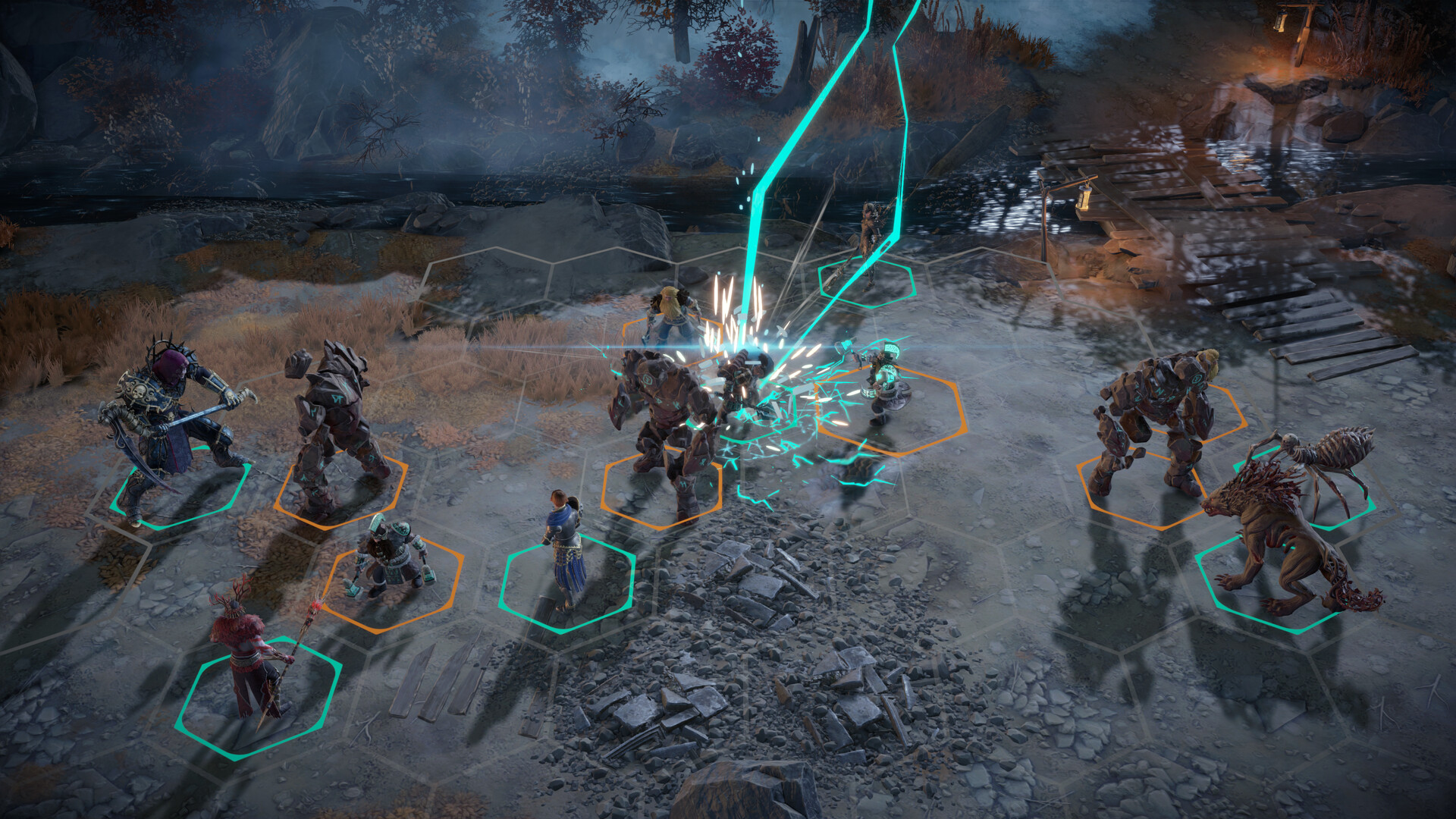
The moment an enemy appears, the perspective flips to a tactical board of hexagonal tiles. Here, the RPG‑style party you’ve assembled takes on a more traditional turn‑based strategy role. Your formation consists of: Heroes – Playable characters you meet during your travels, each with a deep skill tree and a distinct narrative arc. Soldiers – Troops recruited from your castle barracks, drawn from different factions.
The core combat loop is deceptively simple: melee units absorb and deal damage, magic units dish out spells, and support characters provide buffs, heals, or crowd‑control effects. However, the depth lies in positioning. Because the hex grid emphasizes adjacency, you can protect a vulnerable spellcaster behind a tank, create choke points with terrain, or flank an enemy line to trigger flanking bonuses that stack with class synergies.
One noteworthy addition is the “Out‑of‑Combat” support slots. These are characters positioned on the periphery of the board who cannot be targeted directly but automatically unleash a skill every few turns—think of a distant archer that fires a rain of arrows, or a magician whose magic grants a temporary attack boost. Managing these auxiliary units adds a layer of strategic nuance that rewards careful planning without overwhelming the player. Your castle serves as a hub for recruitment and upgrades. With the ruling‑simulator aspect, forcing you to make meaningful political decisions that ripple into battlefield options.
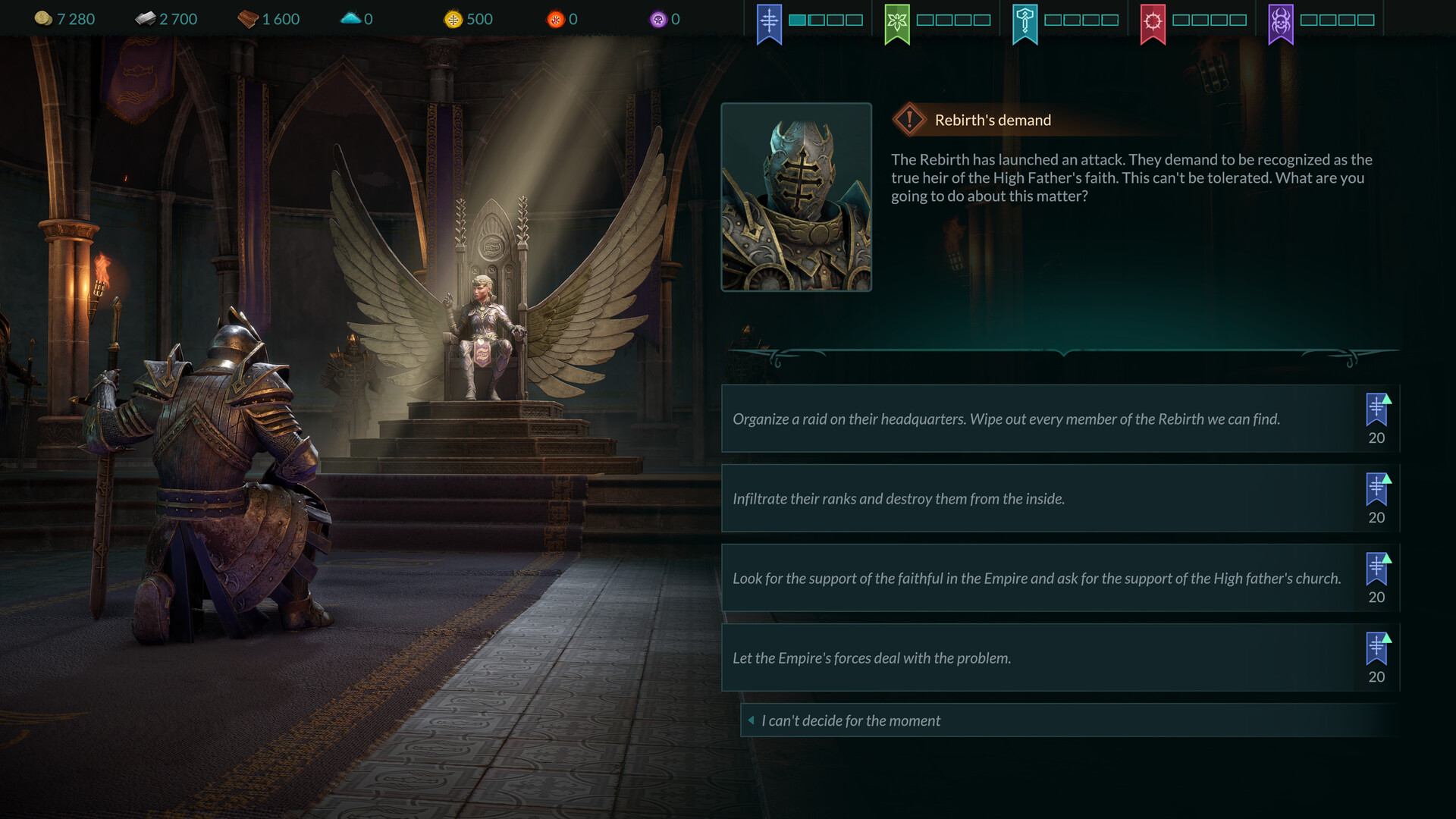
Beyond the battlefield, you’ll spend a fair amount of time in the castle’s council chamber, making decisions that affect faction relations, resource allocation, and the overall stability of your realm. These choices echo the political mechanics of Fable 3. While the impact of each decision isn’t always earth‑shattering, it does create a sense of agency.
One of the strongest virtues of Domination is how exploration and combat complement each other. Because the world is not a “combat‑only” arena, you can enjoy the world more. The pacing never feels rushed; you’re never forced into a battle just because you crossed a checkpoint, a design choice that makes the world feel lived‑in rather than a series of forced encounters.
Dark Fantasy with a Polished Edge
Disciples: Domination is beautifully rendered. The isometric camera captures the grim, gothic architecture of ruined citadels alongside vibrant, overgrown wilderness. Character models are detailed, with distinct armor silhouettes and animated spell effects that pop against the muted backgrounds. The hex‑grid battlefields are crisply outlined, allowing you to see unit placement clearly even on a busy screen.
Voice acting, however, is a mixed bag. While many characters receive solid, gritty performances, the overall tone often skews uncharacteristically upbeat. In a world that visually screams “dark, dangerous, on the brink of annihilation,” it’s jarring to hear a supporting character chirp and be jolly. The dialogue delivery feels stiff at times, with limited emotional range.
The user interface has been overhauled from Liberation. Menus are streamlined, inventory screens are searchable, and tooltip text has been expanded for clarity. In‑battle UI shows health bars, turn order, and active buffs in a compact overlay that never obscures the battlefield.
Narrative elements are delivered via cutscenes, dialogue boxes, and in‑world interactions. The opening cutscene does an excellent job of summarizing Liberation without alienating newcomers. Throughout the game, dialogue portraits show faces, though the animation is limited. The writing is competent, but occasionally leans into familiar tropes. Nonetheless, the mix of main quests and optional lore entries provides enough depth for those who enjoy world‑building.
Conclusion – A Worthy Successor Worth Your Time
Disciples: Domination is a solid, well‑crafted entry that finally brings the series’ signature blend of RPG character progression and hex‑based tactical combat to a broader audience. Its open‑world design, intuitive battle system, and meaningful political choices make it feel fresh.
Overall, Disciples: Domination stands out in a genre that rarely sees strong, polished releases. If you enjoy turn‑based strategy, character‑driven RPG growth, or the satisfaction of ruling a kingdom with both sword and pen, this game deserves a spot on your shelf. While it isn’t flawless, its strengths far outweigh its shortcomings, and for a long‑running series, it feels like a return to form—perhaps even the best Disciples entry to date.
Leave a Reply