
The year 2026 is proving to be a promising period for fans of city-building simulation games. With the release of Theos: Cities of Myth, players are transported back to ancient Greece, tasked with the dual challenge of managing a burgeoning metropolis while keeping a chosen deity thoroughly satisfied. Ultimately, Theos establishes itself as a relaxing and visually appealing title, though it is hampered by several technical and mechanical kinks that pull down the overall experience.
City Management: Progression and the Frustrating Route System
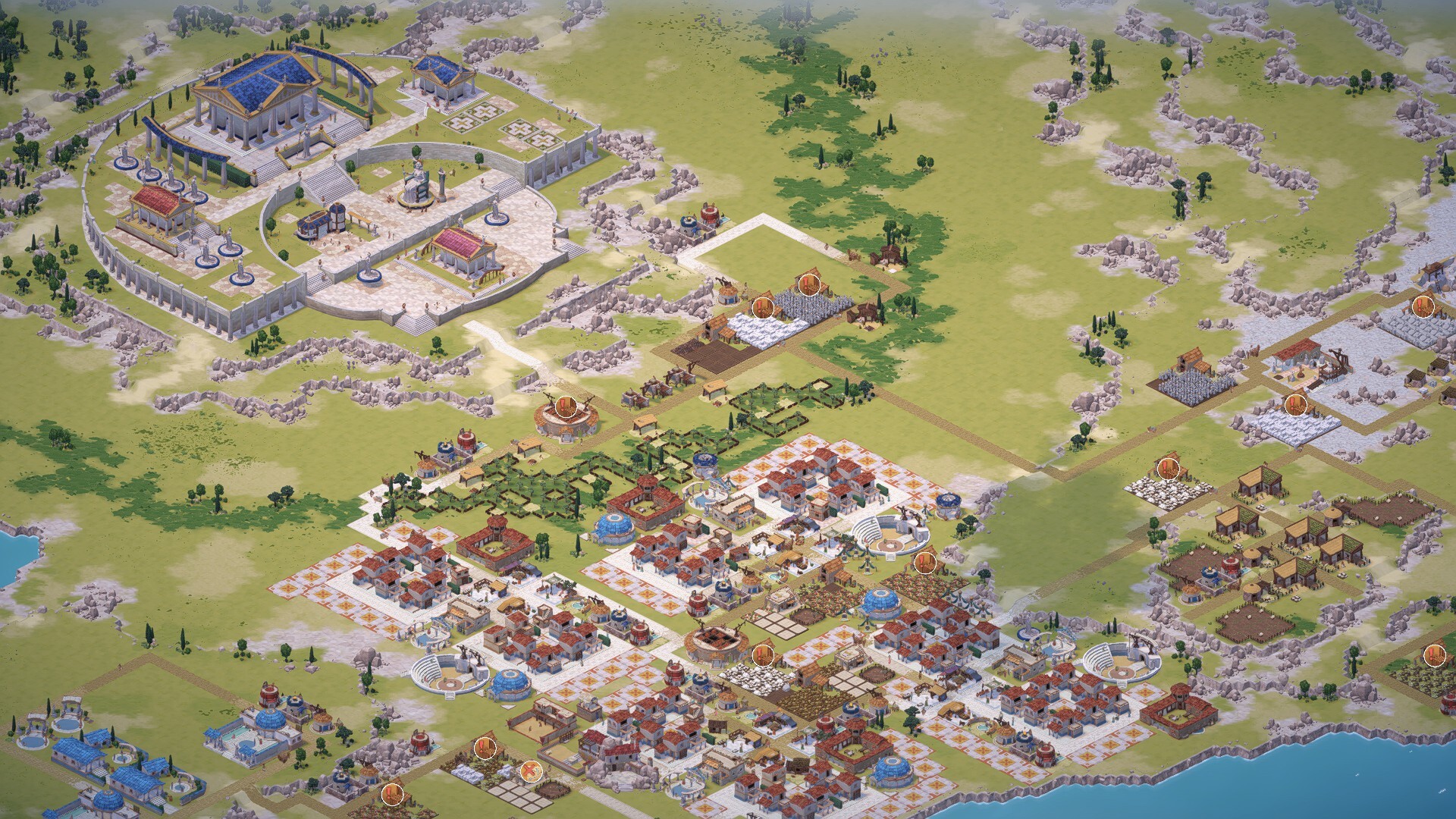
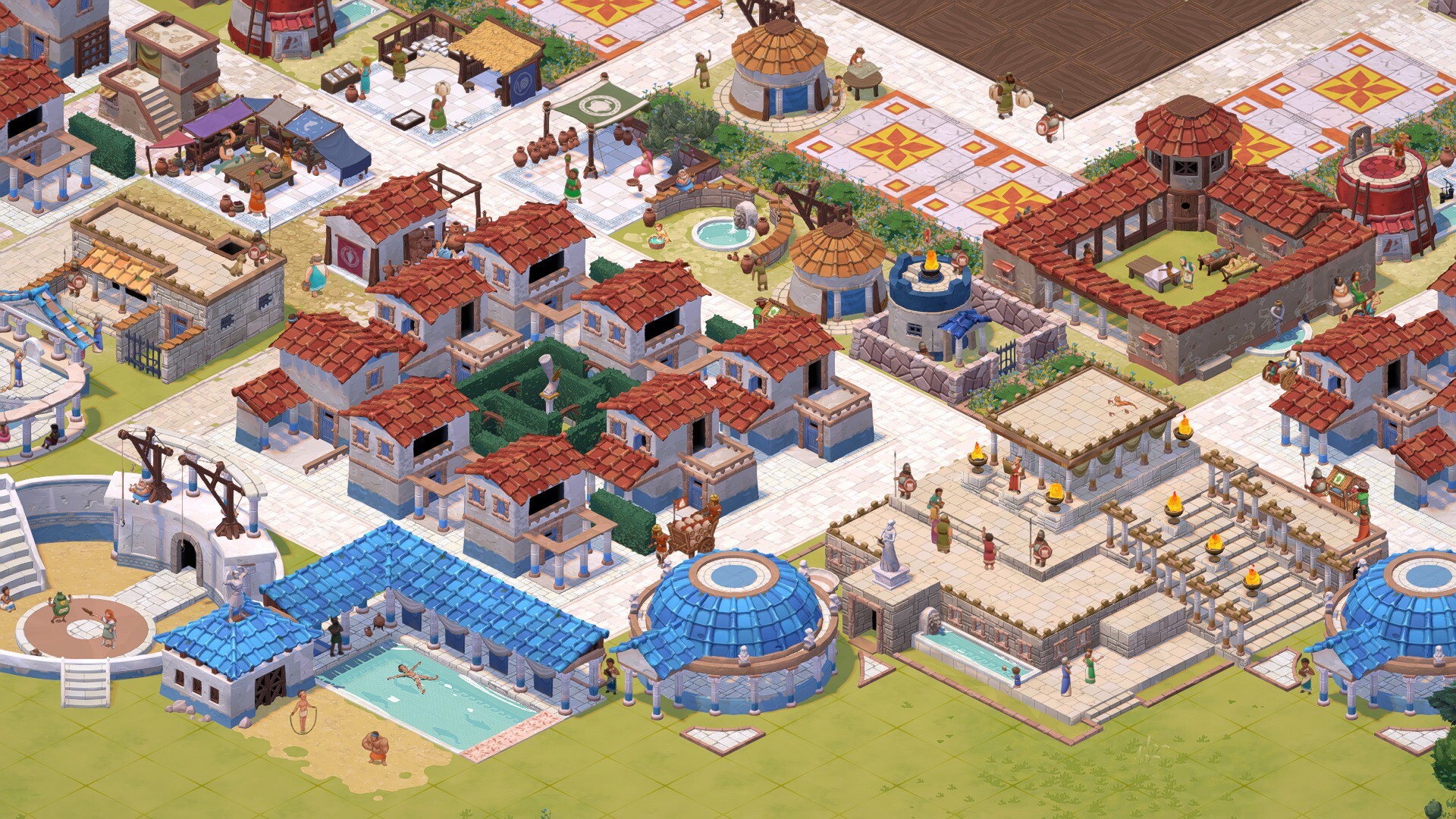
At its best, the core gameplay loop offers rewarding mechanics. Upgrading residential buildings is handled organically: rather than manually clicking to upgrade individual structures, housing levels up automatically based on the overall prosperity and provided services of the city. Starting with basic food supplies, neighborhoods gradually evolve as you introduce various forms of entertainment and amenities. Furthermore, integrating decorations, such as statues, flowers, and fine architecture, boosts population well-being while naturally enhancing the visual appeal of the streets.
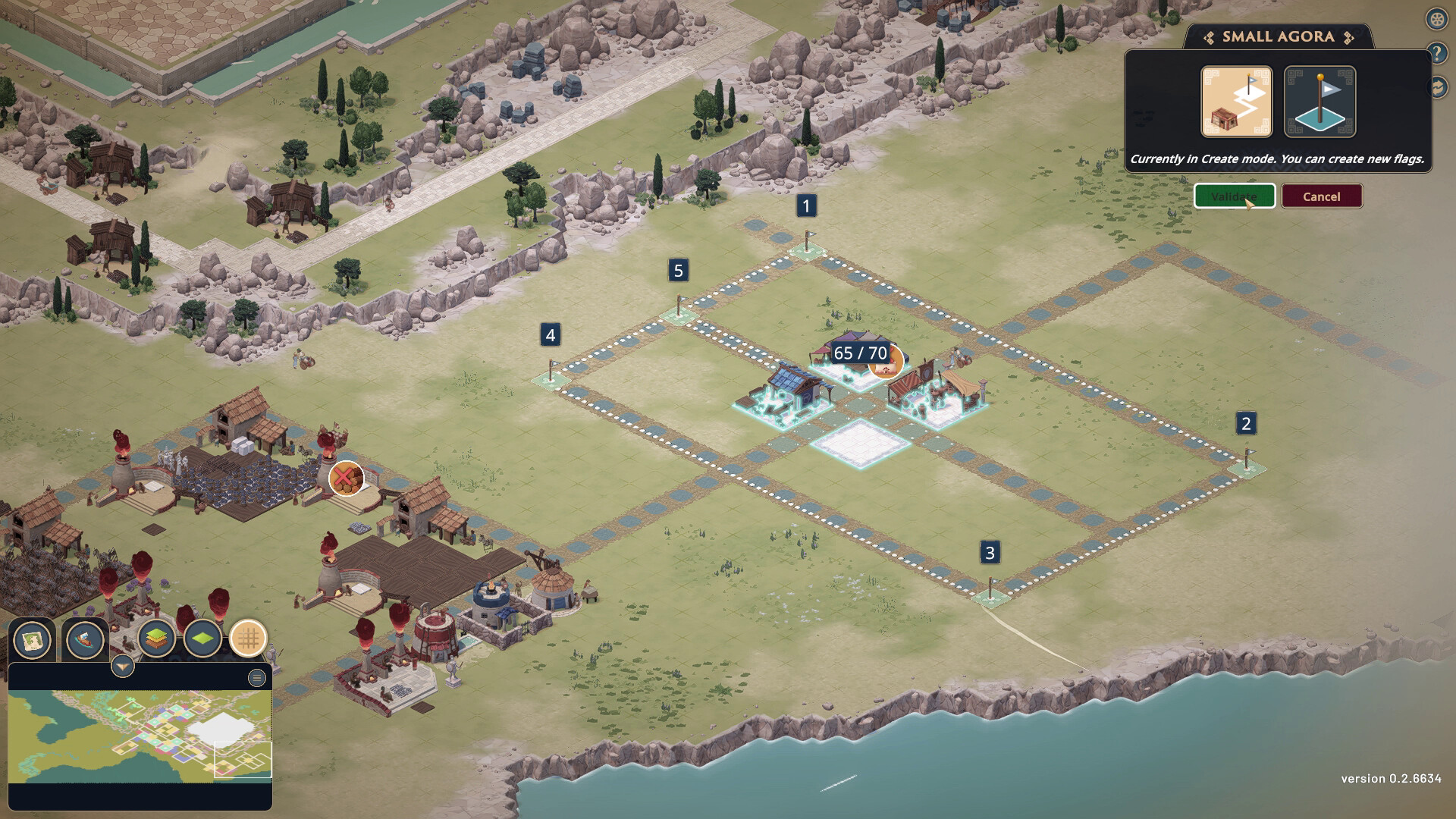
However, the game suffers from a significant design hurdle: the route system. Most structures require a functional route to operate, which players must manually map out using placed flags to designate the path. While the underlying concept is understandable, the execution feels overly messy and irritating. A disproportionate amount of playtime is consumed by micromanaging these routes rather than enjoying the organic growth and expansion of the city.
Divine Favor and Visual Charm
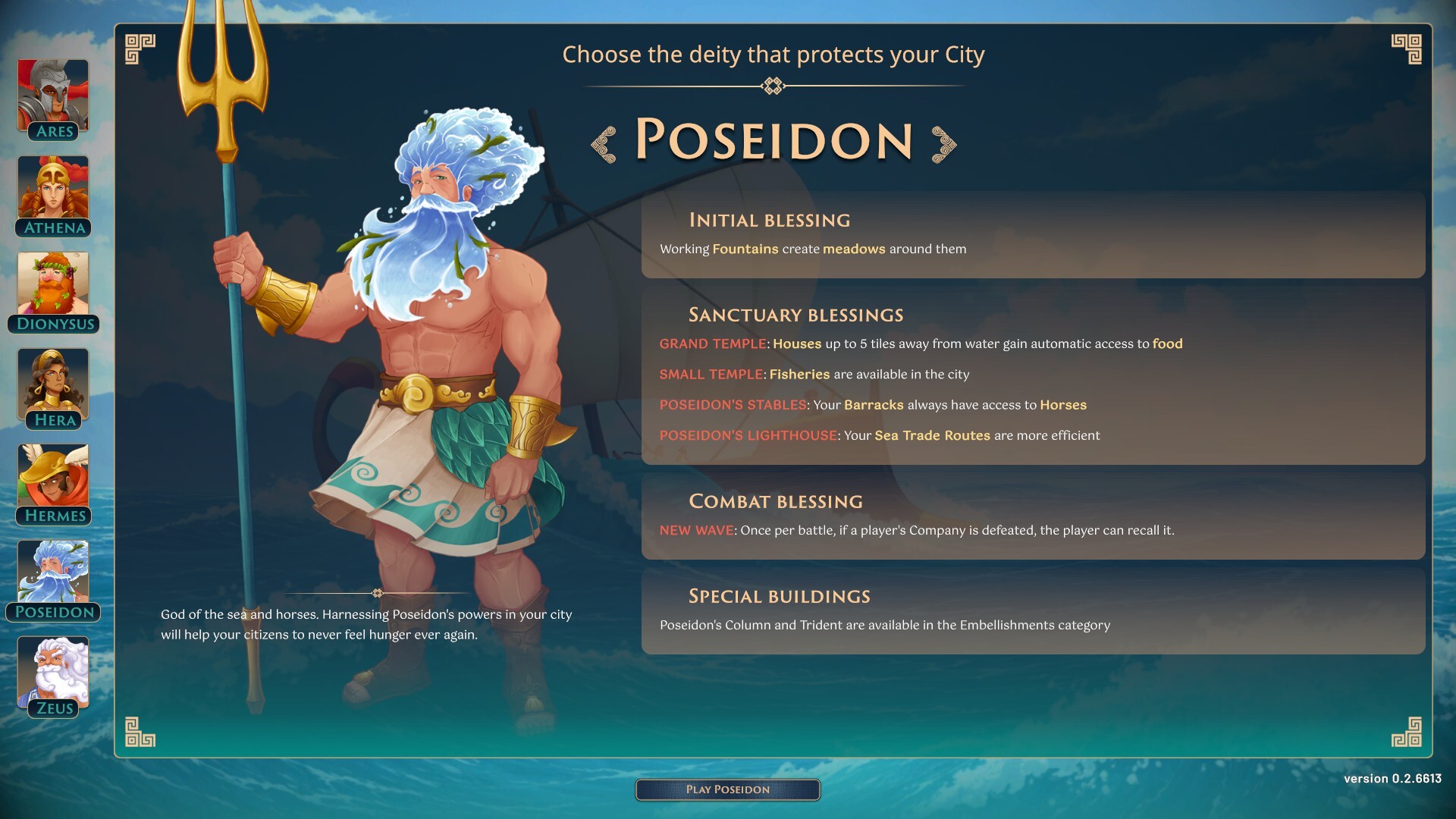
Beyond urban planning, players must select and appease a patron deity. Balancing the city’s growth requires foresight, as the temples and divine offerings frequently compete for the same resources needed to sustain your mortal citizens.
Aesthetically, Theos leans into a colorful, slightly cartoonish art style that evokes a distinct Settlers 2 nostalgia. There is a cozy, calming atmosphere to the visuals that encourages players to zoom in and admire the bustling streets of a thriving metropolis, or appreciate the expansive vistas from afar. While this charming art direction works wonderfully, it is worth noting that its vibrant aesthetic bears a close resemblance to modern mobile strategy and farming games, which may not appeal to every traditional strategy fan.
Content Depth and Technical Performance
Priced appropriately for its scope, Theos: Cities of Myth is a lighter experience compared to heavyweights in the genre. It features a limited selection of buildings and resource chains, meaning veterans looking for deep, complex economic simulations may find it lacking. Fortunately, the modest price point accurately reflects this lighter content offering.
More pressing concerns lie in the game’s current technical state. Optimization is noticeably lacking; the game frequently pushes CPU usage to maximum limits, resulting in loud fan activity during what should be low-intensity moments. Additionally, I encountered occasional crashes and freezes. These technical hiccups extend to the tutorial phase, which, while necessary to grasp mechanics like the route system, feels overly prolonged, poorly written, contains noticeable typos, and surprisingly omits a few key instructional points.
Conclusion
Theos: Cities of Myth is, at its heart, a cozy and attractive city builder tailored for a relaxing evening session. Functioning as a city builder light, it spares players from crushing complexity, offering a manageable number of buildings and resources to track. While the frustrating route system and current technical instability hold it back, its charming ancient Greek setting and laid-back atmosphere make it a worthwhile consideration for casual fans of the genre.
Leave a Reply