
Have you ever wondered what would happen if you took the addictive thrill of opening trading card packs, collecting monster-collecting joy of Pokémon, and tossed in a healthy dose of base-building? The answer is Stackmon, a creative and surprisingly addictive game that brings these together into a cohesive whole. While it might look like a monster-catching RPG at first glance, it is actually a deeply satisfying resource-gathering adventure played entirely through cards.
The Camp: Base-Building and Card Survival
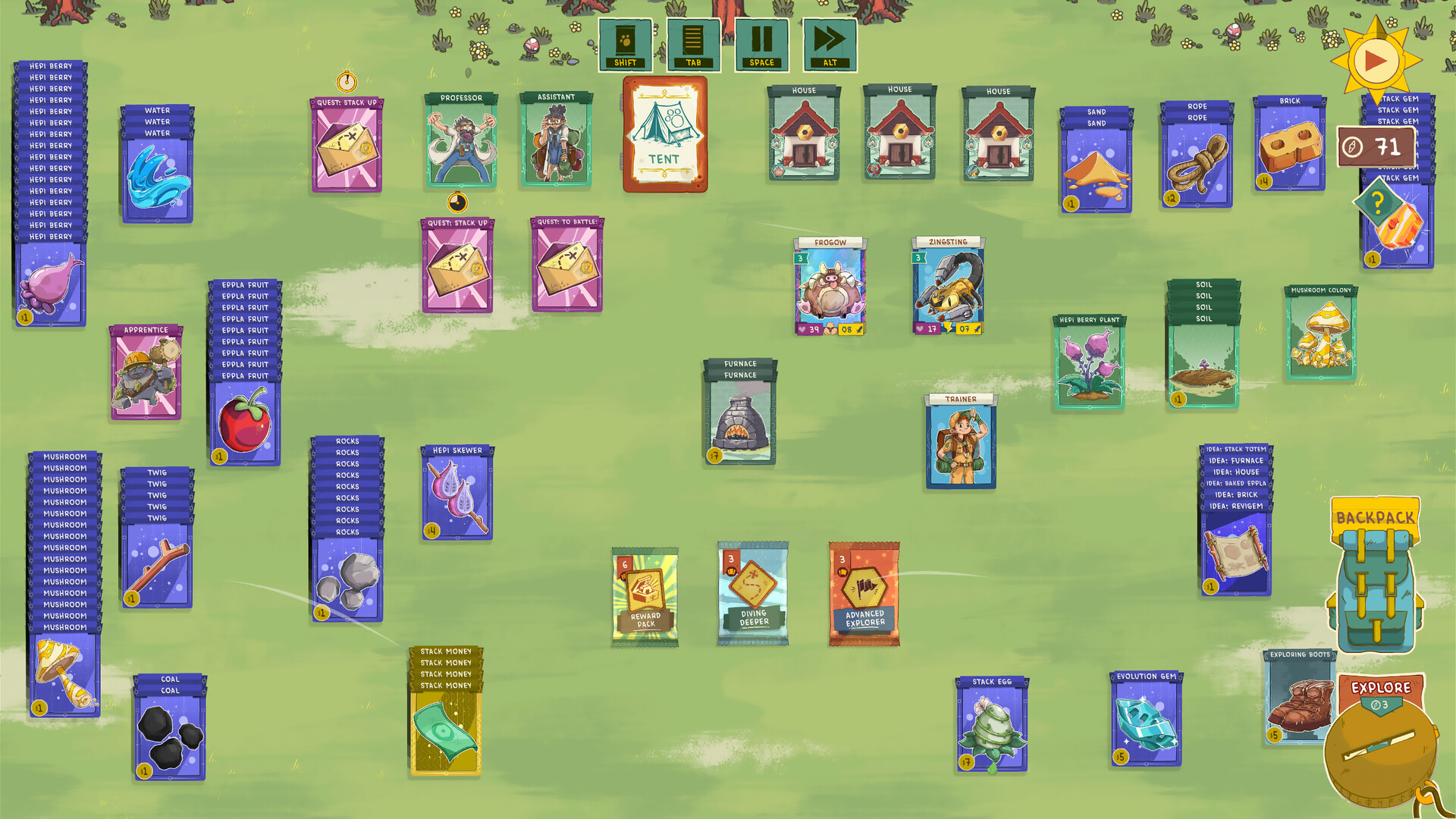
Your journey in Stackmon begins at your camp, which acts as your primary base of operations. The gameplay loop here revolves around opening various card packs. These packs reward you with a wide array of resources, valuable hints, and crucial blueprints. These blueprints dictate what items you can combine to craft better tools, advanced structures, and improved gear. If you find yourself overrun with cards you don’t need, you can easily sell them for cash to fund your next round of pack openings.
The materials you acquire either come ready to use or in raw forms that must be harvested manually by you or your creatures, affectionately known as Stackmons. This mechanic gives the camp phase of the game the distinct feel of a card-based survival game. It feels and plays remarkably well, so much so that one could easily spend the entire game just managing the camp and thoroughly enjoying it.
The camp is also where you will pick up quests. Completing these quests is straightforward yet satisfying: you simply stack the required items directly onto the quest card. Fulfilling a quest rewards you with money and adventure points, which are the key to unlocking new horizons.
Adventures, Battles, and Card-Based Exploration
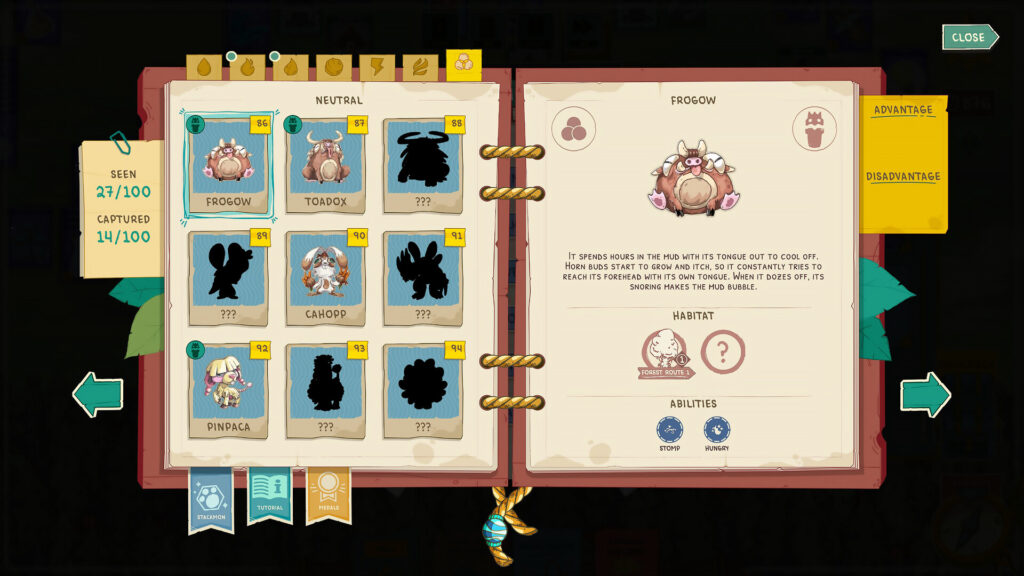
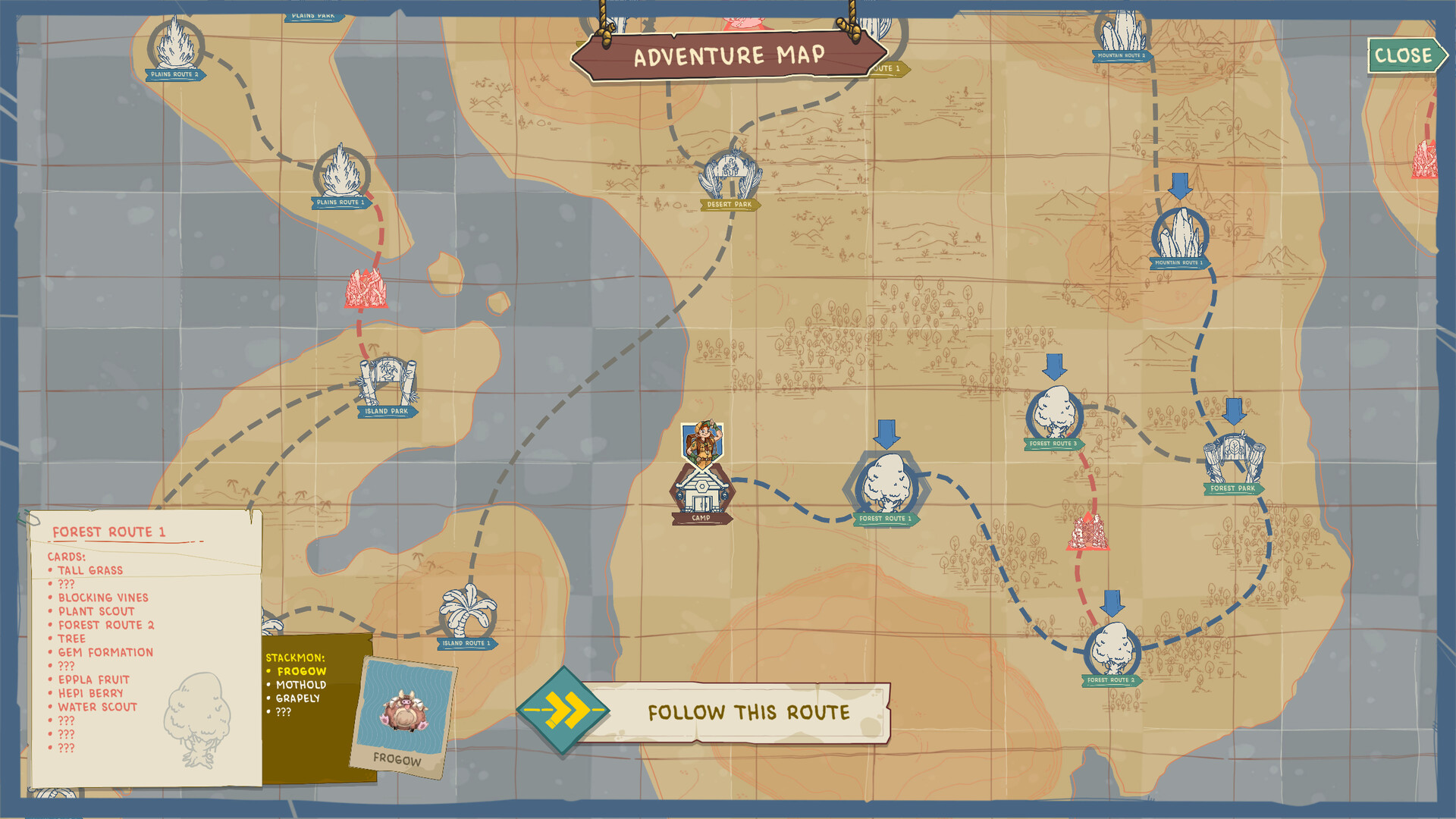
Once you have earned enough adventure points, you can embark on journeys along specific routes that lead to entirely new boards. These new boards introduce fresh card packs to open, providing even more resources. You will also encounter tall grass cards. By placing your trainer card onto a patch of tall grass, you spawn a wild Stackmon. From there, you can either battle and catch it (provided you have the correct items) or defeat it for experience points if catching isn’t your goal. Interestingly, even experience is represented as a physical card that you stack directly onto the Stackmon you want to level up.
As you explore these new boards, you will also cross paths with rival trainers. These opponents carry their own Stackmons into battle. Winning these trainer fights typically clears the mission area, paving the way to brand-new routes and undiscovered locations.
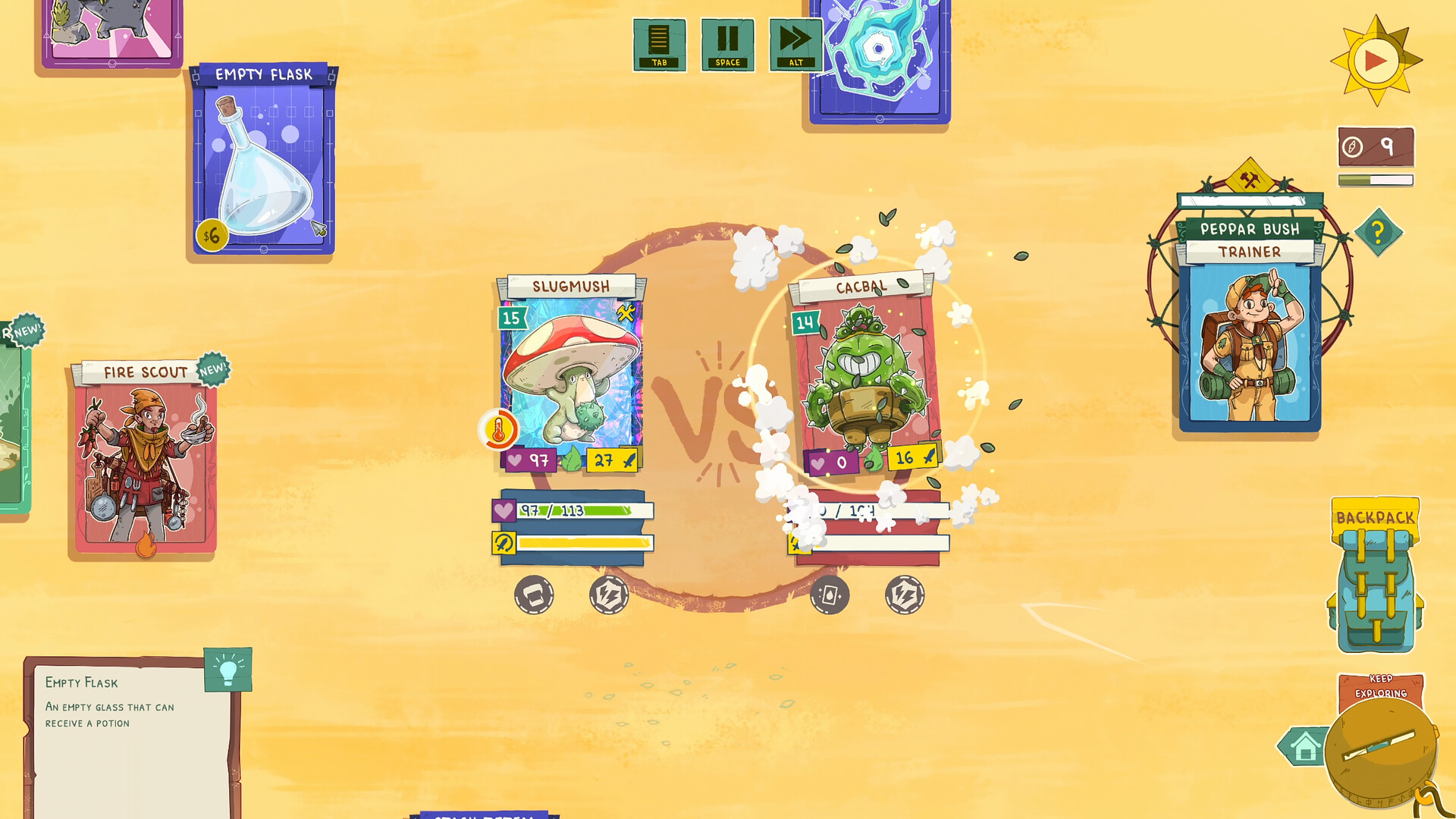
The combat system in Stackmon is entirely automated, focusing heavily on stats rather than active input. Every combatant has a health pool, attack power, and specific skill cooldowns. When a battle commences, units attack automatically whenever their action meter fills up, making cooldown management just as crucial as raw power.
Because the battles run themselves, the game allows for incredible multitasking. You can easily have multiple automated battles playing out at the same time while simultaneously harvesting materials with your trainer. There is rarely any downtime, meaning the screen can get delightfully busy with constant activity if you choose to play at a brisk pace. The sheer loop of gathering materials, building new structures, and collecting cards using a clever card-placement board is endlessly fun and executes its mechanics brilliantly.
It is worth noting that while Stackmon does feature a narrative, it is pretty generic and sits largely in the background. It doesn’t heavily impact the moment-to-moment gameplay, but it serves as a fine excuse to push forward on adventures, collect every Stackmon, and earn money for better card packs.
Conclusion
Ultimately, Stackmon delivers a wonderfully casual experience that shines brightest when played in short, satisfying bursts. It is not designed to be an intensely challenging hardcore game, nor does it feature a gripping, cinematic story to drive you forward. Instead, it succeeds because collecting monsters is inherently fun, and the physical act of stacking cards feels consistently great.
If you go in expecting a traditional monster-battling RPG just because it bears a superficial resemblance to Pokémon, you might be surprised. It is far removed from that genre, establishing itself instead as a delightful resource-gathering, base-building adventure built entirely out of cards.
Leave a Reply