
When Disco Elysium debuted in 2019, it didn’t just release; it detonated. It fundamentally shifted the landscape of modern CRPGs, earning its place as a generational game and catapulting the studio, ZA/UM, into the stratosphere of critical acclaim. However, the path from that high point to today has been fraught with turbulence. Internally, the studio has faced significant upheaval, characterized by the departure of key creative architects and a cloud of negative controversy regarding the treatment of former employees.
Zero Parades: For Dead Spies arrives at a precarious moment. ZA/UM is tasked not only with delivering a compelling experience but with reconciling its creative identity in a post-original-talent world. Having spent considerable time in the rain-slicked streets of Portofiro, I can confidently say that while the DNA of Disco Elysium pulses through every line of code, Zero Parades: For Dead Spies stands on its own merits as a distinct, ambitious, and somewhat refined evolution of the narrative-driven RPG.
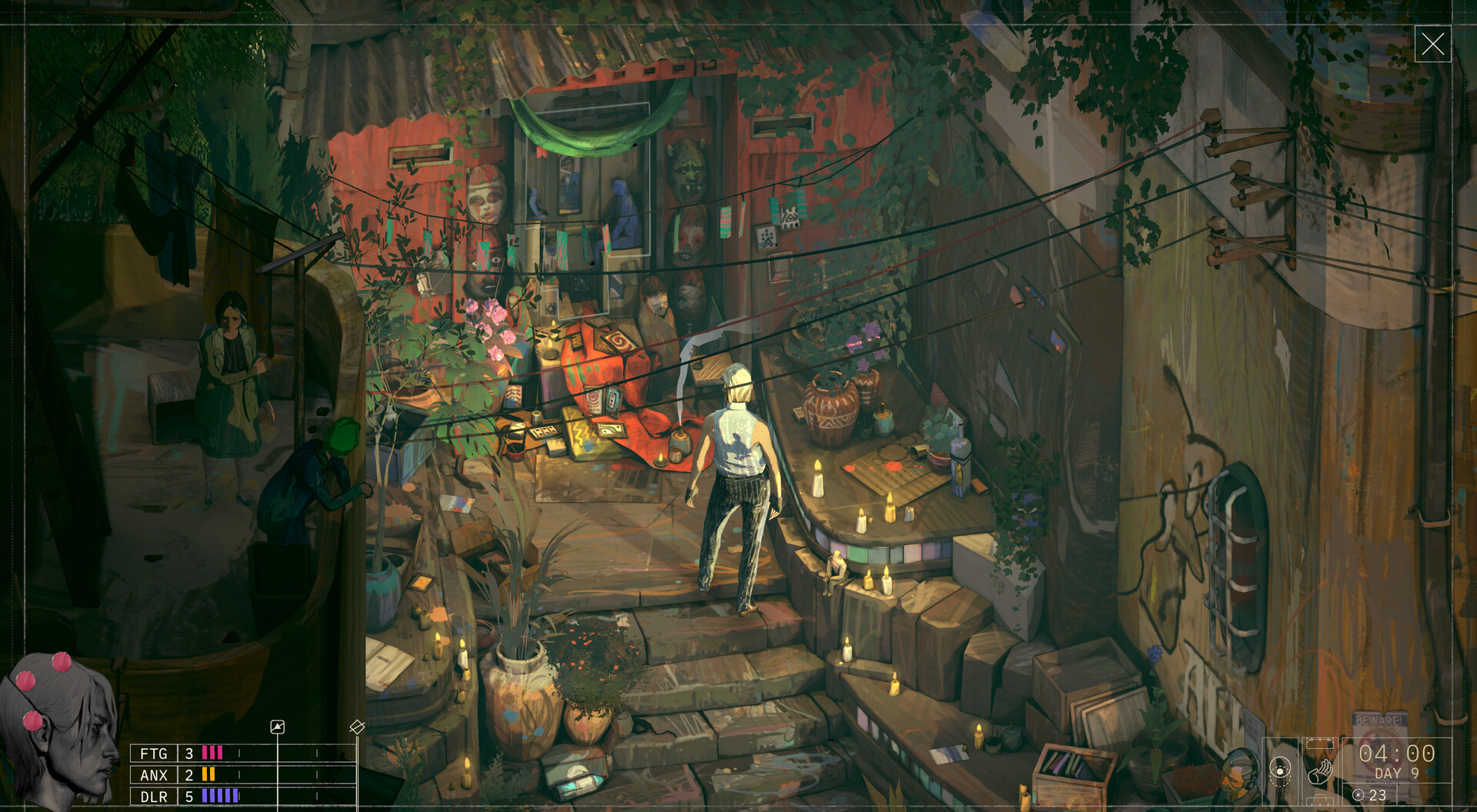
The Slow Burn of a Cold War
Zero Parades: For Dead Spies transports players to an alternative 1990s, a world steeped in peculiar science fiction elements and the heavy, metallic tang of an ideological stalemate. The setting, the city of Portofiro, serves as a microcosm for a broader culture war between capitalist and communist factions. It is a premise that feels tailormade for early-90s geopolitical intrigue.
You step into the trench coat of a communist spy, a veteran of the intelligence game now pulled from his desk-jockey retirement after a botched operation necessitates a return to the field. It is a strong, noir-steeped setup, though players should be prepared for a slow burn. The pacing is deliberate, perhaps even stubborn. While the prose is consistently sharp and sophisticated, the story takes significant time to find its rhythm and stakes.
The tone is decidedly darker than its predecessor, fitting a true spy thriller. When the narrative finally hits its stride, and your connection with the protagonist deepens, the game becomes an all-consuming experience. Yet, there are moments where the writing feels indulgent, lingering far longer on certain internal monologues than strictly necessary, threatening to stall the momentum of the plot. Perhaps more disappointing is world-building. Where Disco Elysium made the decaying world of Revachol feel like a living, breathing character through every scrap of lore, Zero Parades feels oddly detached from its own geography. I craved a deeper understanding of Portofiro’s history and broader geopolitical context, but the game keeps its secrets behind a wall, leaving me struggling to find an emotional anchor in the setting itself.
Mechanical Mastery and the Weight of Decisions
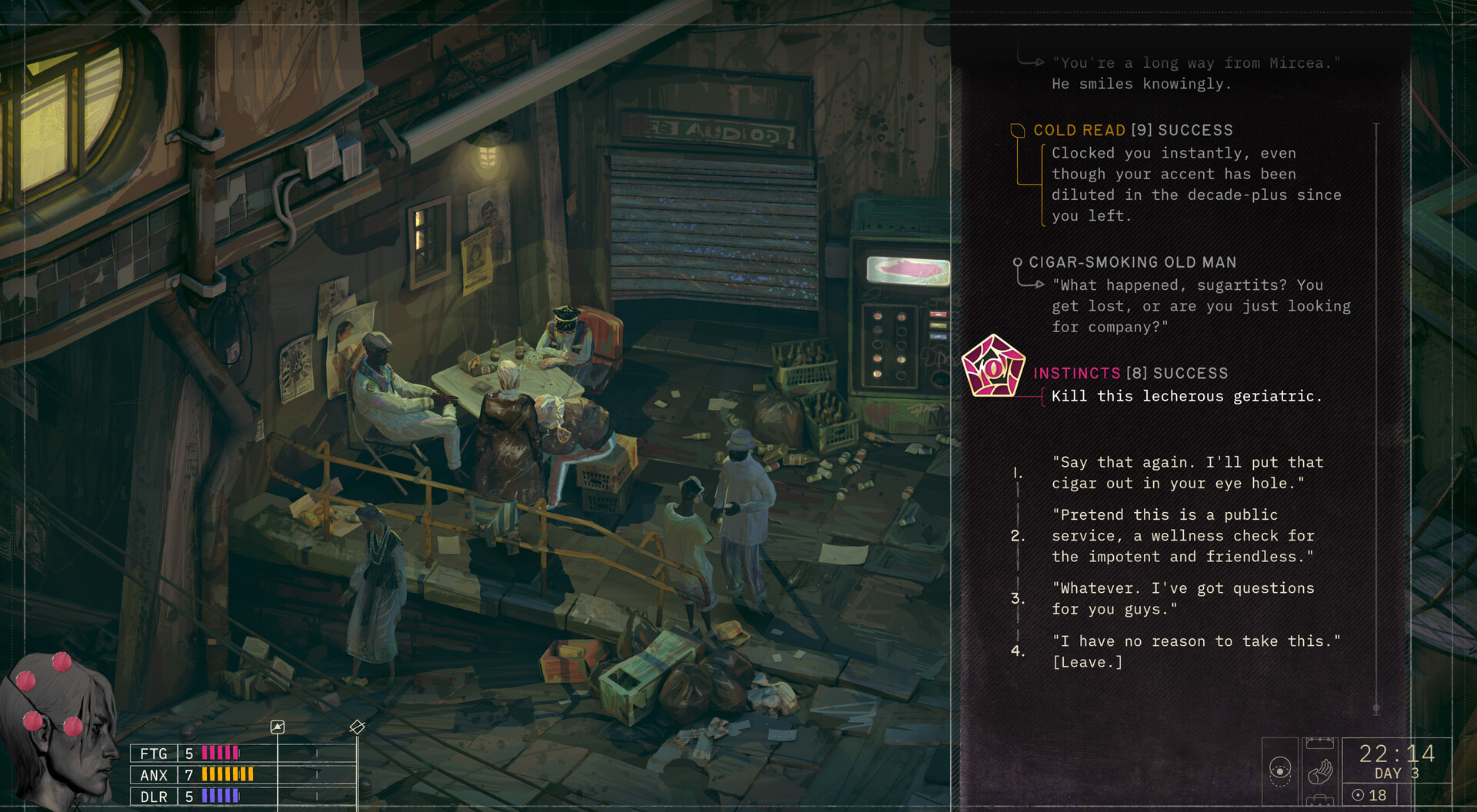
Gameplay-wise, Zero Parades maintains the structure of a pure Tabletop/CRPG. There is no traditional combat here; instead, the conflict is internal and relational. You build your character through various stats that dictate the success or failure of your choices, all mediated by the cold, indifferent physics of the dice.
What separates Zero Parades from its sibling is how it iterates on the foundation. The introduction of Push Checks feels great. The game introduces three stress meters: Fatigue, Anxiety, and Delirium. When faced with a difficult choice, you can push your luck, potentially improving your outcome at the cost of pushing these meters into the red. Filling a meter triggers severe consequences, such as the permanent loss of a skill or a debilitating character state. This forces you to weigh your desperation against your survival in a way that feels tangibly anxious.
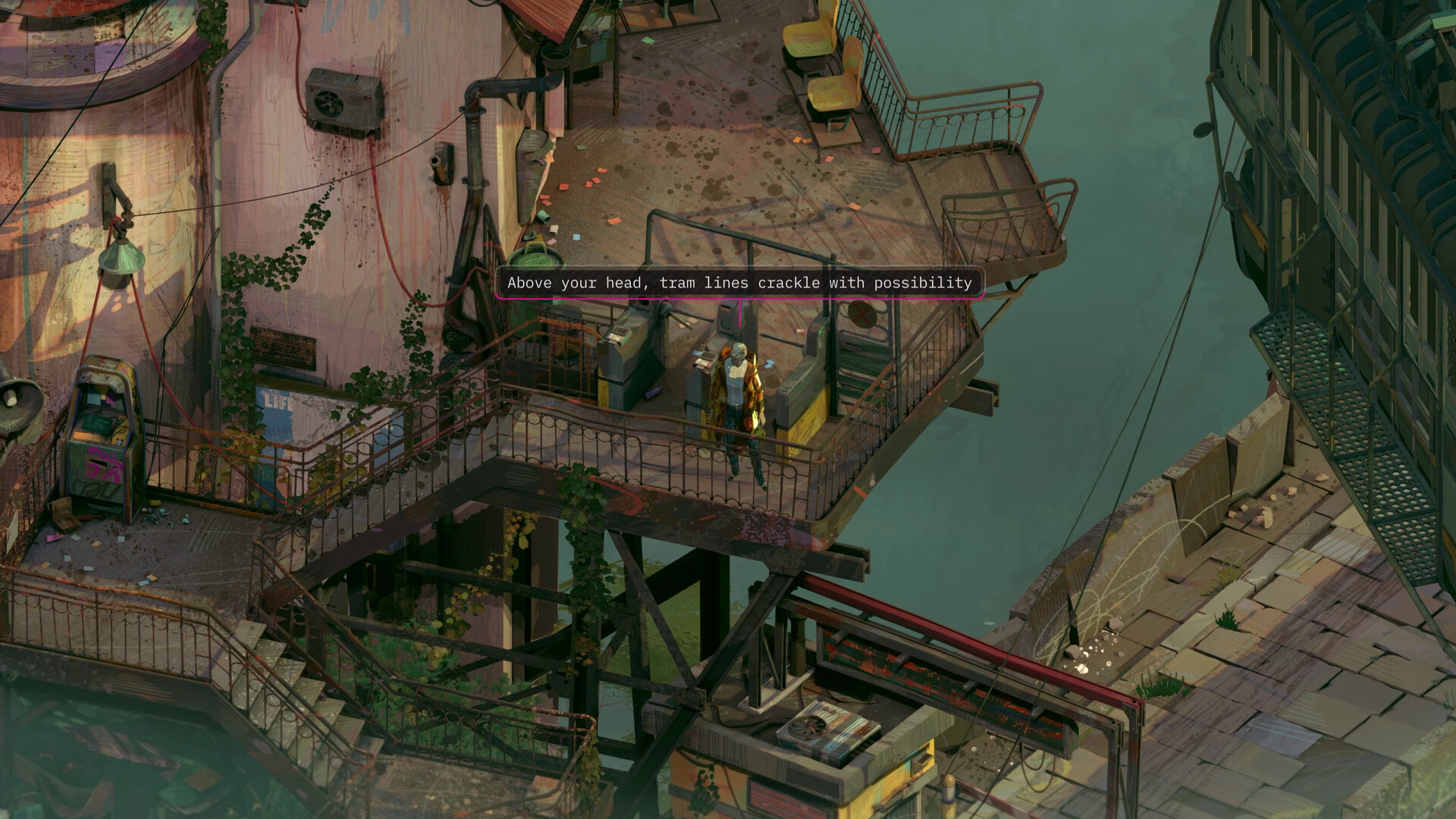
Combined with high-stakes “split-second” decision sequences that force you to act without the luxury of time, the game demands deep, frantic roleplaying. You aren’t just selecting options from a menu; you are living the erratic, often terrifying life of someone whose every choice carries the weight of a state secret. Furthermore, traversal is vastly improved. Moving through the world feels fluid and tactile, removing the sometimes clunky navigation that plagued the early hours of Disco Elysium.
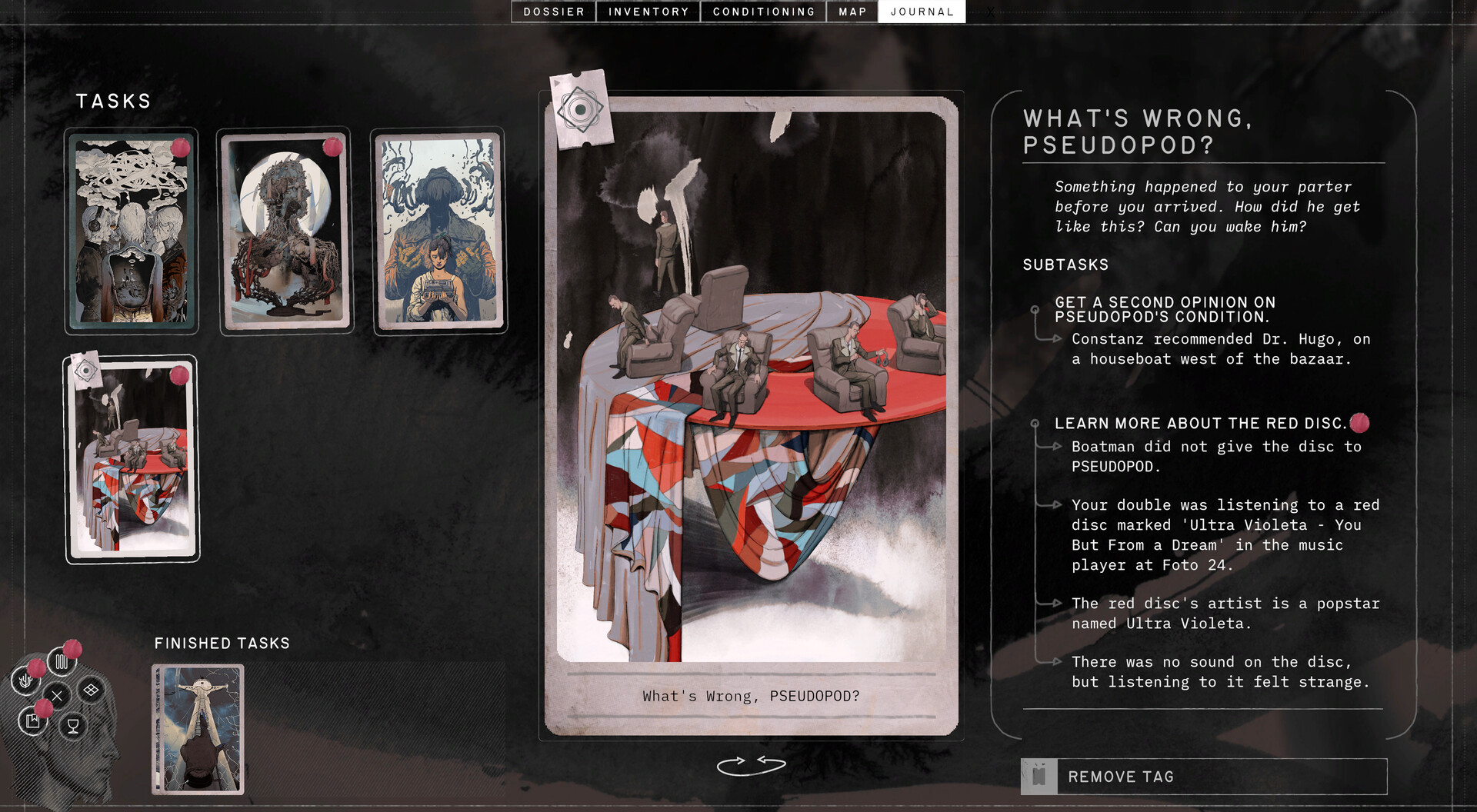
The Aesthetic of Espionage
Visually, Zero Parades remains faithful to the painterly, evocative style that defined the studio’s aesthetic. While I had hoped for a more radical evolution in the visual language, the art still carries a heavy, moody weight that complements the tone. It is a game dense with background detail, and the audio design is nothing short of great. The ambient score and environmental soundscapes create a claustrophobic, immersive atmosphere that sells the feeling of being a spy in a city of secrets.
The voice acting is a notable addition. Unlike the initial launch of Disco Elysium, Zero Parades arrives with a massive amount of voiced content, roughly three-quarters of the dialogue. It is a welcome inclusion that adds life to the cast, though it is not without its flaws. While the performances are generally solid, the quality is inconsistent, and I found myself wishing for complete, uniform voice acting to ensure total immersion.
Conclusion: A Legacy Refined
Zero Parades: For Dead Spies is an impressive achievement. It is a well-written, tense spy thriller that forces the player into a state of constant, calculated risk. While it struggles at times to break free from the long, sprawling shadow of Disco Elysium, particularly in its world-building and reliance on established gameplay tropes, it succeeds where it matters most. By introducing meaningful, high-tension mechanics like stress-meter management, ZA/UM has proven that they possess the vision to carry their craft forward.
If you are looking for a title that demands your total focus and rewards your roleplaying with brutal, satisfying consequences, Zero Parades is an essential addition to your library. It is a game that knows its legacy, respects its roots, and in its best moments, soars well beyond them.
Leave a Reply