
Deckbuilding card battlers have exploded in popularity over the last few years, carving out a massive niche in the indie gaming landscape. With the market so densely packed, it is incredibly difficult for new titles to make a name for themselves. Magin: The Rat Project Stories attempts to stand out by doing something few competitors have dared: moving away from the roguelike loop and embracing a linear, fully-voiced, narrative-driven experience. With Daedalic Entertainment, a publisher known for prioritizing character-led story games, at the helm, the premise looks solid on paper. Unfortunately, despite its ambitions, the final product never quite reaches the potential it promises.
A World of Grey, Marred by Clichés
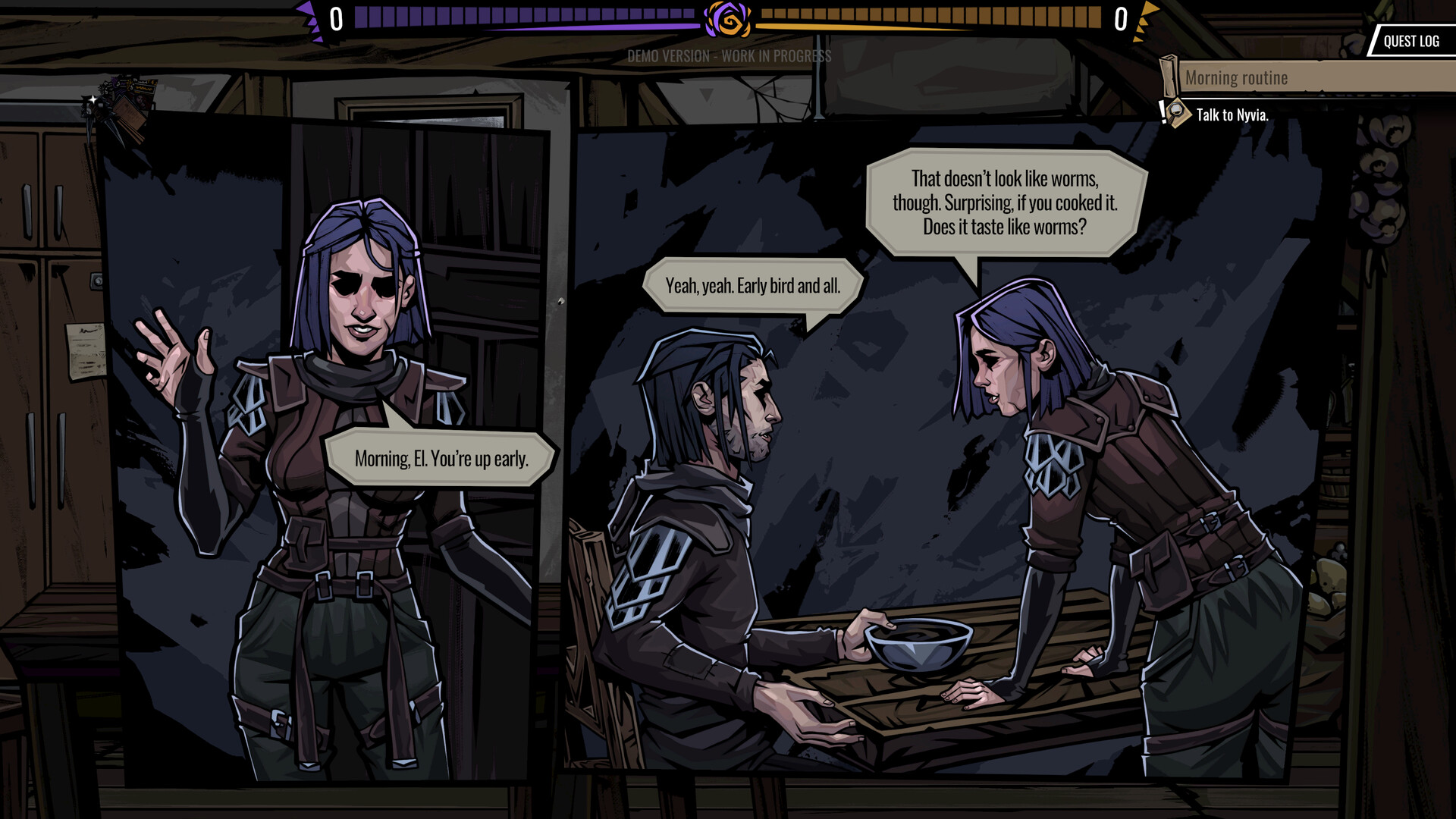
The worldbuilding in Magin: The Rat Project Stories is undeniably interesting. It dares to occupy a mature space where characters operate within complicated moral grey zones, a refreshing departure from the typical good versus evil tropes. The core concept of a ragtag group fighting for the survival of their town provides a compelling anchor for the narrative.
However, the execution is hampered by inconsistent writing. The game attempts to inject humor throughout, but it rarely lands with grace. Often, the transition from serious, dark storytelling to comedic moments feels rushed and clumsy. In its attempt to appear mature, the script often devolves into a swear-heavy marathon, relying on cringeworthy dialogue rather than genuine wit. Early on, you encounter two adolescent characters who speak and act like a hollow imitation of Beavis and Butt-Head, and not in an endearing way. This lack of tonal balance persists throughout the journey, making it difficult to fully invest in the characters when they feel like walking clichés.
Combat and the Essence of Frustration
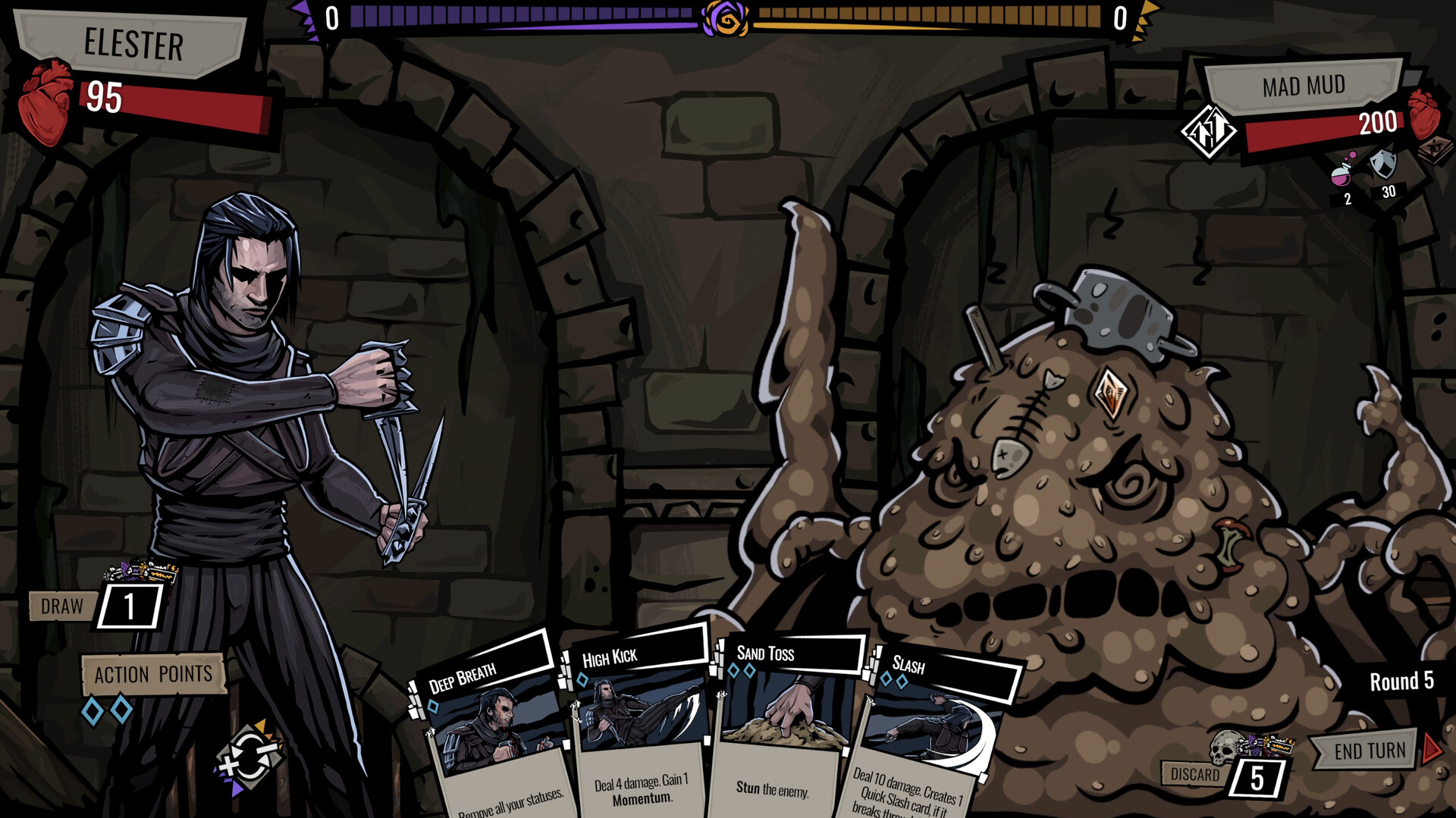
The gameplay loop is where Magin faces its most significant hurdles. The combat encounters feel fundamentally unbalanced. Rarely does a battle feel like a strategic, fair clash between two intellects; instead, playing Magin often feels like a cycle of trial and error. I restart encounters repeatedly, hoping to draw the perfect hand in the exact right order just to survive the turn.
Enemies frequently boast bloated health bars and deal massive damage, which causes, what should be quick, punchy card battles to drag on for far too long. The pacing is noticeably off; the intervals between these grueling fights are too long, and when a fight finally triggers, it feels like a chore rather than a thrill. The game would have benefited immensely from shorter, more frequent encounters.
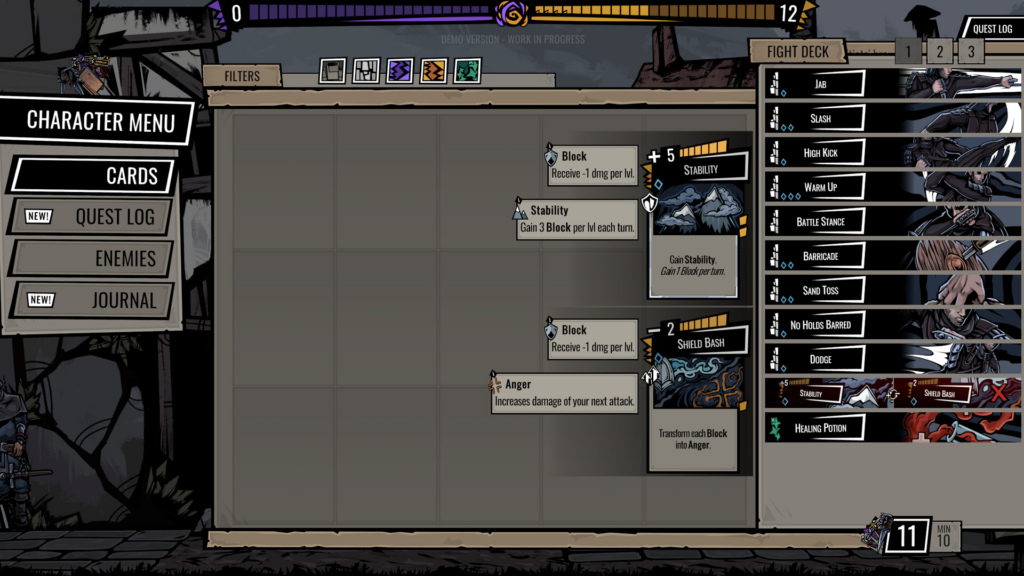
On the mechanical front, the game introduces an Essence system tied to your narrative choices. These unique cards are two-sided, and the player chooses which side to utilize upon acquisition, one side generates essence, while the other consumes it. Exceeding your essence threshold triggers a variety of buffs and debuffs. While this is the game’s most innovative feature, it feels underutilized. Most of my time was spent playing mundane, generic cards while waiting for these essence-based mechanics to show up. The rate at which you acquire new cards is sluggish, leaving little room to cultivate a unique playstyle or experiment with deck synergy until it’s far too late in the game.
A Visual and Auditory Success
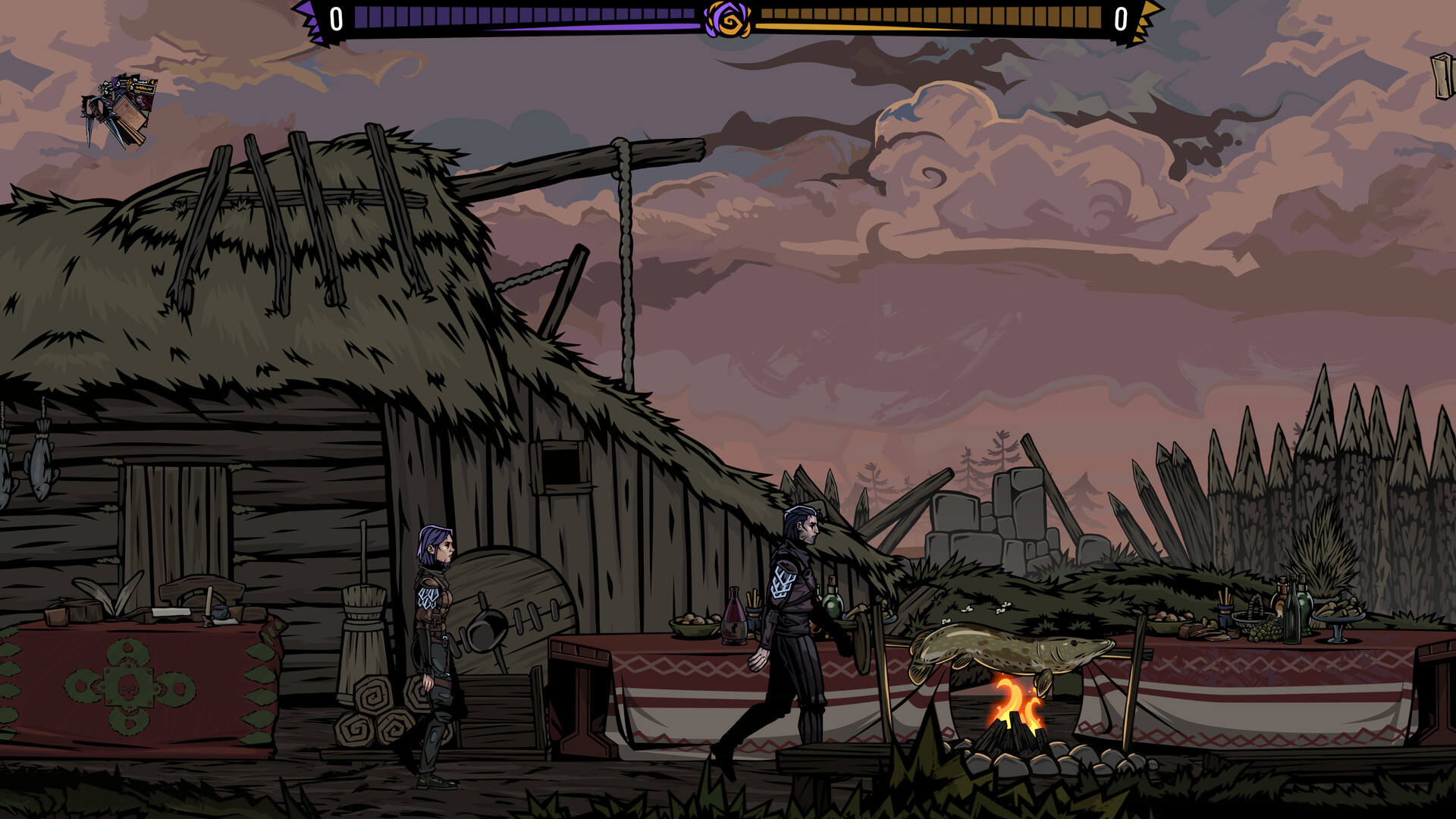
If there is one area where Magin shines, it is in its presentation. The art style is great, featuring character designs that are distinctive and memorable. The environments are detailed, perfectly capturing that heavy, grim, and dark atmosphere the story strives for. During the exploration segments, the game feels less like a deckbuilder and more like a point-and-click adventure, which is a testament to the strength of its visual identity.
Furthermore, the full voice acting is a fantastic addition. It provides a level of immersion and emotional weight that a text-only game would have lacked, effectively carrying many of the scenes that might have faltered on the page.
Conclusion
Magin: The Rat Project Stories is a true rollercoaster, oscillating between moments of genuine intrigue and deep frustration. The inclusion of a fully voiced, dark, narrative-heavy campaign is a welcome evolution for the genre, and there are flashes of brilliance in the essence-based combat system. However, these highlights are consistently overshadowed by strange design decisions, particularly regarding the tedious length of battles and the lack of deck-building variety. It is a game with a great heart and a stylish exterior, but it lacks the mechanical polish to make it a standout title in a crowded market.
Leave a Reply