
In the realm of skateboarding video games, few titles have dared to venture as far into the realms of the bizarre and surreal as Skate Story. Developed by Sam Eng under the umbrella of Devolver Digital, known for their support of unconventional and avant-garde projects, Skate Story promises an experience that is as much about the art and philosophy of skate culture as it is about the technical skill of executing perfect grinds and ollies. Despite its ambitious attempt to blend style, substance, and skateboarding, Skate Story falls short in several key areas, making it a title that, while intriguing, fails to find its balance.
The Weirdest Demon on a Board
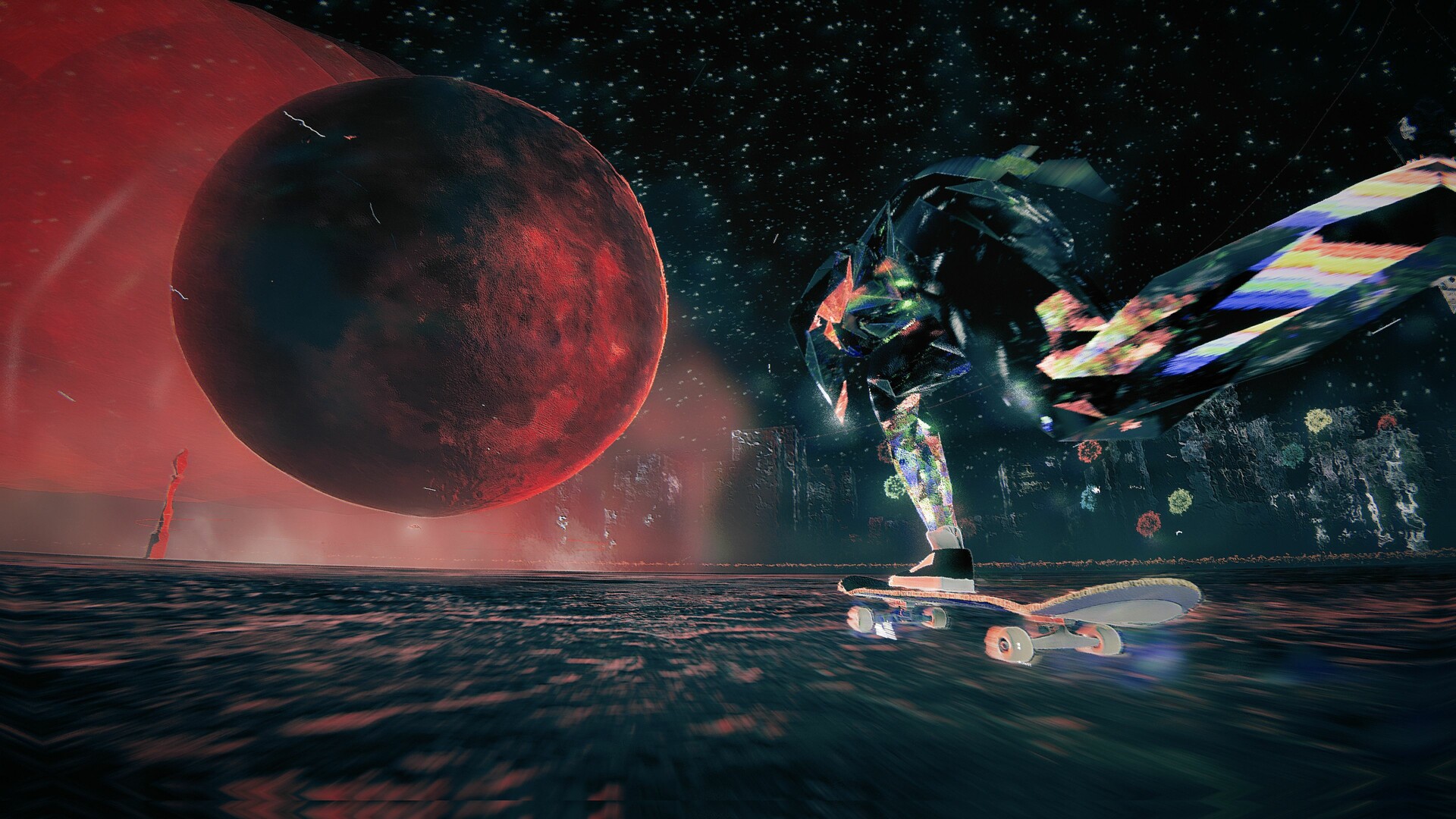
Skate Story starts with a premise so gleefully unhinged, it’s impossible to forget. You play as a demon (or perhaps a demon-adjacent entity; the lore is… interpretive) whose goal is to devour the moon. The game’s story is a chaotic, artsy mess—think Alice in Wonderland directed by someone high on existential dread and cheap espresso.
The lore is delivered through cryptic dialogue, visual metaphors, and interactions in open-world areas. But instead of clarifying the bizarre scenario, these segments muddy the waters. The developers vision feels like a David Lynch meets Jodorowsky vibe, but the result is more impenetrable mood board than provocative art house.
Unfortunately, the story isn’t just strange—it’s actively detrimental. The open-world sections, where lore is drip-fed through missions, drag the pace and dilute the core fun. If you’re here for skateboarding, these segments feel like a mandatory detour into someone else’s fever dream.
Skateboarding That’s Good, But Not Great
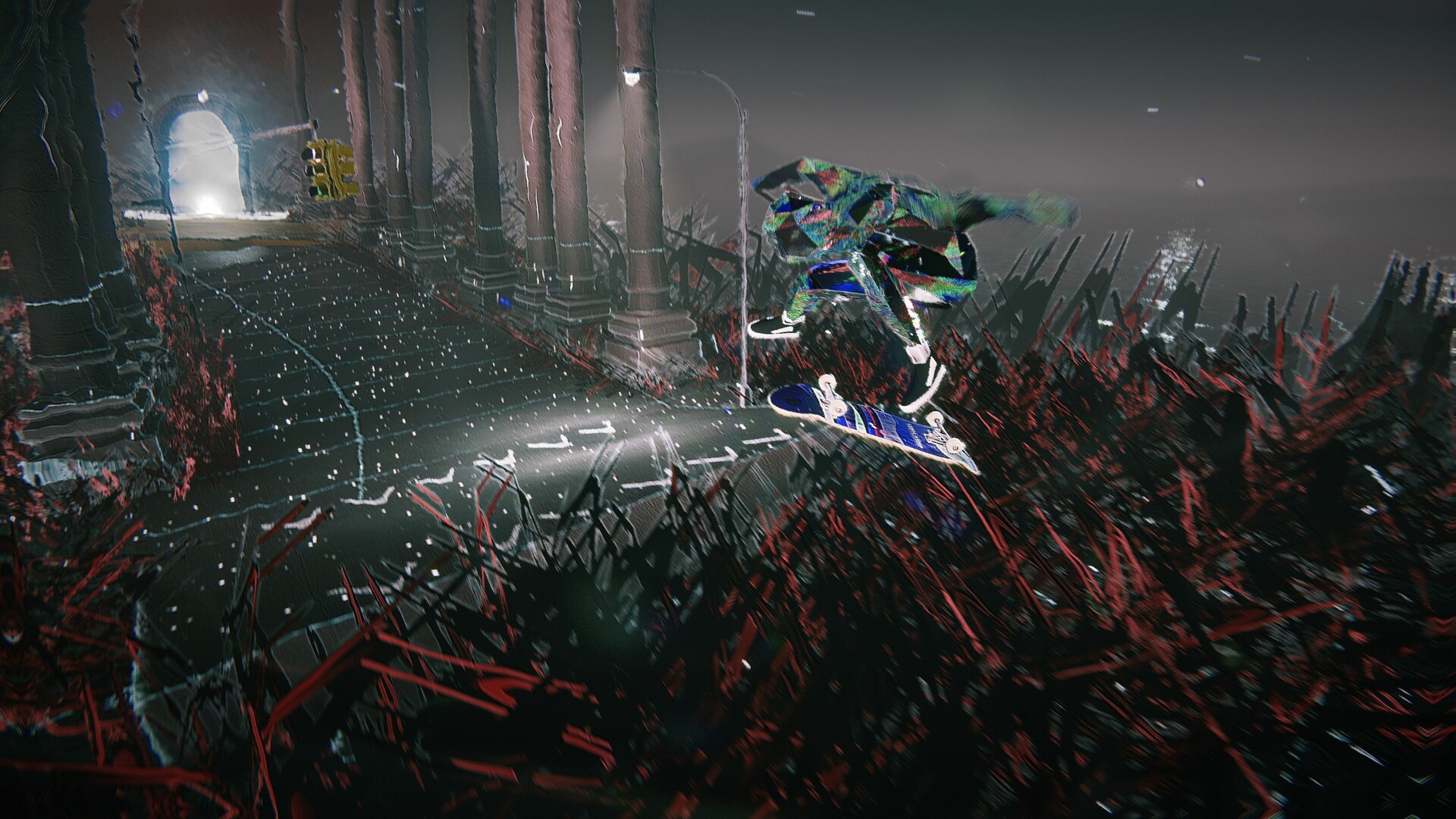
The core of Skate Story is its skateboarding mechanics, and while they’re passable, they’re far from revolutionary. The control scheme is basic: combine tricks with movement to avoid obstacles, grind rails, and build momentum. The camera often feels a little off, and the character’s movements are imprecise at times, with occasional stutters and lag that make navigating level sections frustrating.
For comparison, Tony Hawk’s Pro Skater perfected the balance of simplicity and nuance. Its controls felt alive, rewarding players with the satisfying crackle of a well-executed trick. Skate Story lacks that spark. Tricks execute with the subtlety of a sledgehammer, and the physics engine sometimes feels like it’s trying to actively sabotage your progress.
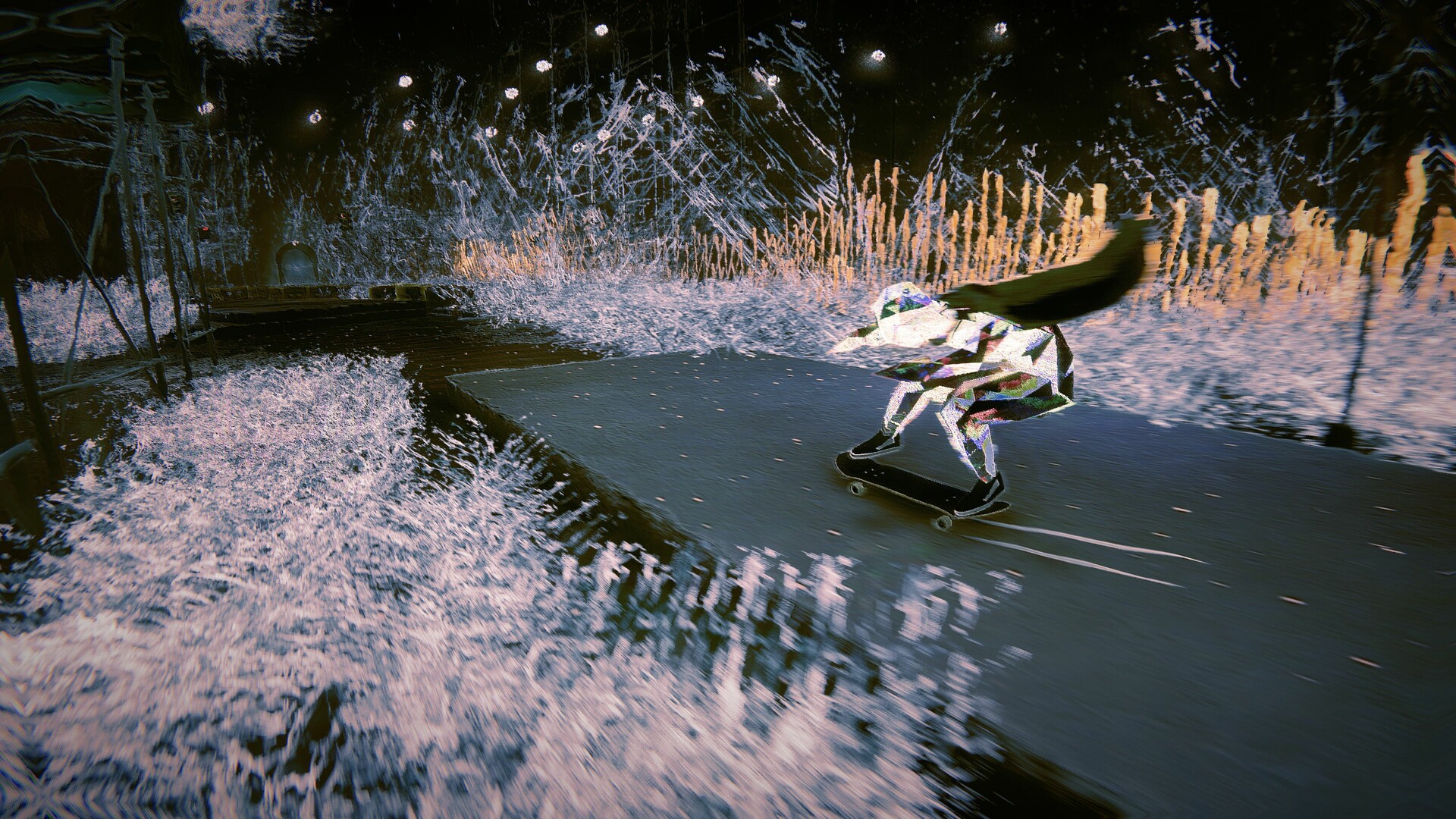
That said, the skateboarding segments aren’t bad. In the linear levels, where the game simplifies the experience into tight, puzzle-like challenges, there are moments of pure joy. These levels operate like skateboarding arcade machines: figure out the correct sequence of tricks, avoid incoming obstacles, and open the door to the next section. Here, Skate Story finds a modicum of clarity. The linearity removes the bloat of open-world exploration, letting you focus on the rhythm of skating and the satisfaction of a clean run.
A Game Split in Two
Skate Story is structured around two competing philosophies, and the result is a game that never commits to a single identity. The open-world areas are designed to mimic the sandbox freedom of Tony Hawk, complete with mysteries, objectives, and sprawling environments. But these sections are clunky and under-polished. The camera zooms in and out unpredictably, and the map is a maze of invisible checkpoints that punish exploration. Meanwhile, the linear levels are where the game almost feels intentional. By focusing on tight, trick-based puzzles, the developers could have leaned into their strengths and delivered a more satisfying experience.
Conclusion: Falls Flat Despite Ambition
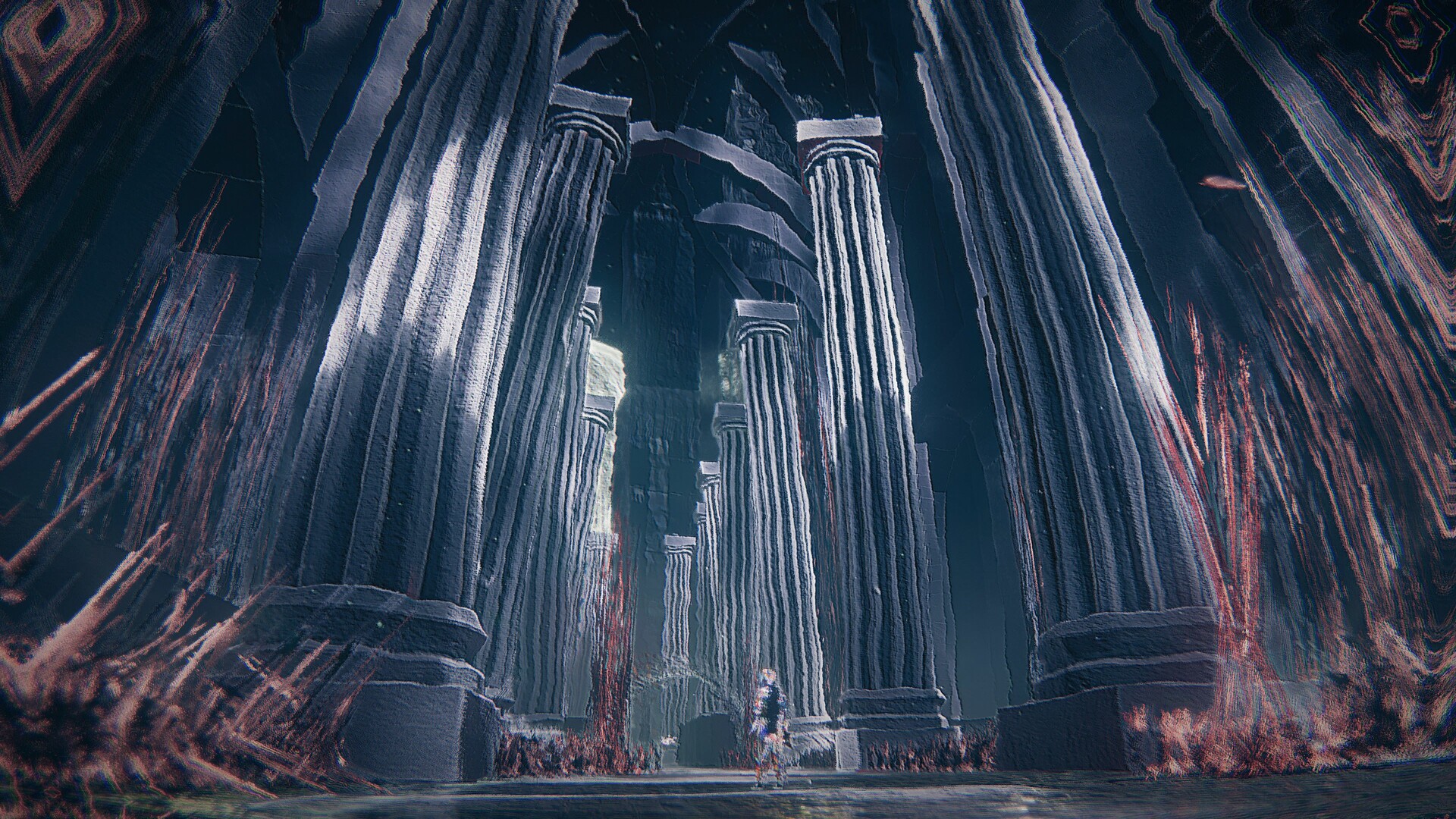
Skate Story is a prime example of a game with more ideas than polish. It’s clear the developers wanted to create a love letter to skateboarding culture while also making a commentary on existence, mental health, and the absurdity of being a demon on a board. But trying to juggle all these ideas results in a game that’s uneven and underdelivered.
The skateboarding feels good in theory but is hampered by clunky controls and inconsistent physics. The story is a convoluted mess that gets in the way of the gameplay. And while the linear levels hint at a stronger core experience, they’re undermined by the open-world sections, which feel like an afterthought.
If you’re a fan of Devolver Digital’s eccentric catalog, Skate Story is worth a glance for its sheer audacity. But if you’re looking for a solid skateboarding game or a coherent story, you’ll be disappointed. The game’s biggest strength—its uniqueness—is also its fatal flaw. It’s like a skate park built entirely of abstract sculptures: theoretically interesting, but nearly impossible to ride.
Leave a Reply